Multiple Banner Styles: The Easy Way to Test AI Banners

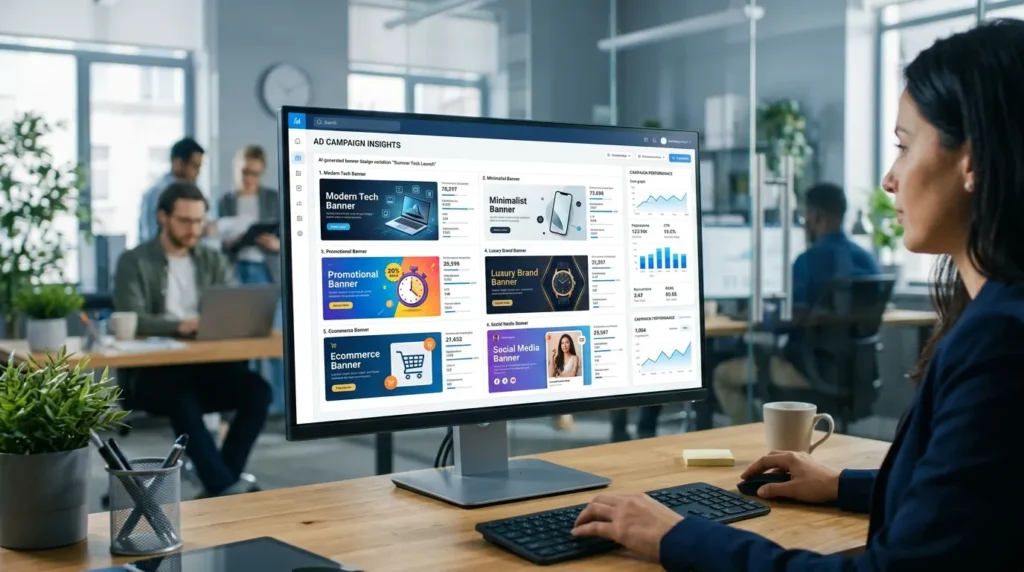
AI Banners help marketers generate multiple banner styles from a single campaign idea, allowing them to test different creative approaches before launching ads. Instead of relying on one design, AI enables businesses to compare banner variations, identify high-performing creatives, improve click-through rates, and optimize campaigns using real performance data.
Key Takeaways
- Generate multiple banner styles in minutes.
- Test creatives before investing more advertising budget.
- Improve click-through rates with AI-powered optimization.
- Reduce creative guesswork using performance data.
- Scale banner production across every marketing platform.
Why Great Campaigns Still Fail
Many marketing campaigns launch with strong offers, well-defined audiences, and carefully planned budgets. Everything appears ready for success. Yet after launch, performance falls below expectations.
When this happens, marketers often blame:
- Audience targeting
- Platform algorithms
- Product pricing
- Budget allocation
- Competition
However, one of the biggest factors is frequently overlooked. The banner itself. Your banner is often the very first interaction customers have with your brand. If it fails to attract attention within seconds, the rest of your marketing strategy may never have the opportunity to succeed.
Why Banner Performance Is So Difficult to Predict
Marketing is driven by human behavior.
Unfortunately, human behavior is rarely predictable.
People respond differently to:
- Colors
- Typography
- Layouts
- Headlines
- Images
- Offers
- Calls to action
- Visual hierarchy
A banner that performs exceptionally well for one audience may generate very little engagement with another. Likewise, a clean and minimal design may outperform a promotional banner on LinkedIn while producing the opposite result on Facebook or Instagram.
This uncertainty makes creative testing one of the most important aspects of modern digital advertising.
The Biggest Mistake Many Marketing Teams Still Make
Despite having access to sophisticated advertising platforms, many businesses continue launching campaigns with only one banner design.
The process usually looks like this:
- A designer creates one banner.
- Internal teams review the creative.
- Everyone agrees it looks professional.
- The campaign launches.
Although this workflow feels efficient, it introduces unnecessary risk. Internal opinions rarely predict customer behavior. The banner that receives the most compliments during meetings is not always the one customers respond to.
Without testing multiple creative directions, businesses never discover whether another banner could have significantly improved campaign performance.
What Are AI Banners and Multiple Banner Styles?
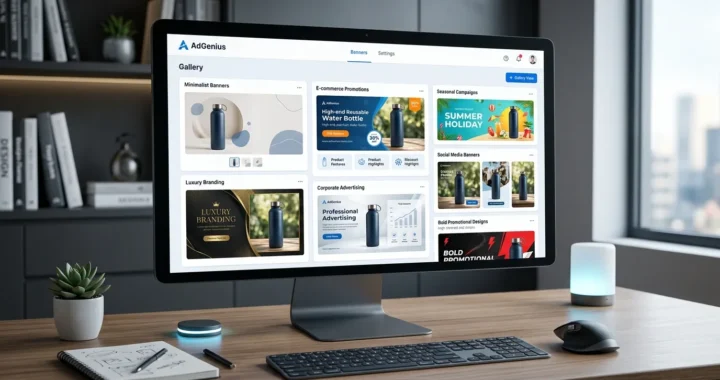
AI Banners use artificial intelligence to generate multiple advertising banner styles from a single campaign concept. Instead of manually designing every variation, AI instantly explores different creative directions while preserving the campaign’s message and branding.
Banner variations may include:
- Modern layouts
- Minimal designs
- Promotional styles
- Premium branding
- Bold advertisements
- Seasonal campaigns
- Platform-specific creatives
Rather than guessing which banner will perform best, marketers can compare several creative approaches before investing additional advertising budget.
Why AI Banners Improve Campaign Performance
Creative testing has become one of the fastest ways to improve advertising results.
Instead of asking, “Which banner looks better?”
Successful marketing teams ask, “Which banner performs better?”
AI Banners make this possible by generating multiple creative variations for testing.
Benefits include:
- Better click-through rates
- Higher engagement
- Lower creative risk
- Faster campaign launches
- Improved audience insights
- More efficient A/B testing
- Better return on advertising spend
These improvements allow marketers to make creative decisions based on data instead of assumptions.
Introducing the TEST Framework™
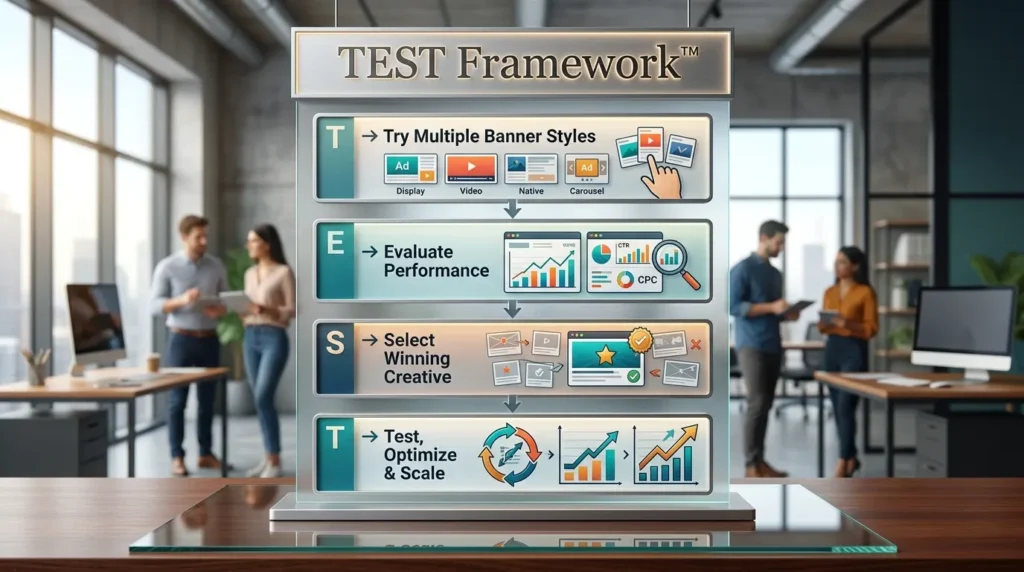
At LovPics, we believe successful advertising begins with experimentation. The TEST Framework™ provides a structured approach to creating, evaluating, and optimizing banner creatives before scaling campaigns.
T – Try Multiple Banner Styles
Generate several creative approaches from one campaign idea instead of relying on a single design.
E – Evaluate Performance
Compare banner variations using engagement metrics, click-through rates, and AI performance insights.
S – Select the Winning Creative
Identify the banner style that performs best with your target audience before increasing advertising spend.
T – Test, Optimize & Scale
Continue refining creative assets based on real campaign performance and expand the highest-performing banners across multiple marketing channels.
Related LovPics AI Solutions
- AI Video Gen: Use property images as visual references and create motion-led video segments with custom instructions, multiple clips, different aspect ratios, music, subtitles, logos, and branded outros.
- AI Reels: AI Reels can support short-form social video workflows using concepts, storyboards, scripts, music, branding, and platform-oriented video content.
- AI Stories: For a property that needs a more narrative presentation, AI Stories can turn a narrative or script into scene-based video segments and combine them into a longer story.
- AI Banners: Property campaigns can extend beyond video into banner creatives using reference images, instructions, multiple styles, aspect ratios, and multilingual content.
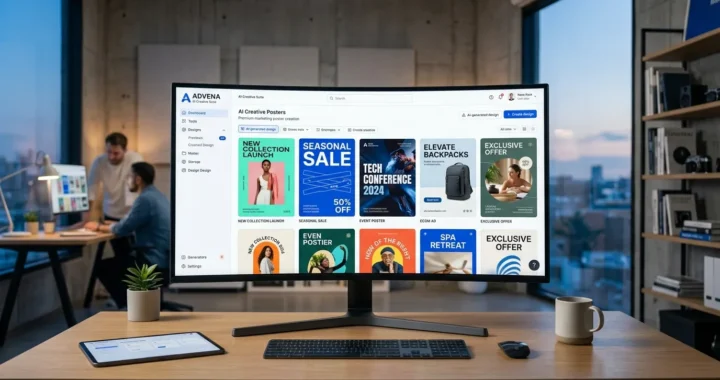
- AI Posters: Property launches, open-house promotions, and campaign announcements can also be adapted into poster formats where appropriate.
- Multi-Frame 360 Generation: Where the available visual workflow is appropriate, multi-frame generation can help create rotating visual presentations. It should not be presented as a substitute for an accurate physical property tour unless the output has been carefully validated.
How Multiple Banner Styles with AI Banners Work
The process begins with a campaign objective. Upload your product, offer, or marketing message into LovPics AI Banners. Artificial intelligence analyzes the campaign and automatically generates multiple creative styles while maintaining your branding.
The AI experiments with different combinations of:
- Layouts
- Colors
- Headlines
- Typography
- Images
- Calls to action
- Promotional emphasis
- Visual hierarchy
Each variation follows professional design principles while exploring a unique creative direction. Instead of waiting days for multiple redesigns, marketers receive several banner concepts within minutes.
Why Testing Beats Guessing
Creative discussions often become subjective. One stakeholder prefers minimal design. Another favors bold promotional graphics. Someone else believes more text improves conversions. Rather than debating opinions, AI Banners encourage experimentation.
Multiple banner styles can be tested using real campaign data, allowing marketers to understand exactly which creative resonates with their audience.
The result is faster optimization, smarter advertising decisions, and better-performing campaigns based on measurable customer behavior rather than personal preference.
Continue Reading on AI Marketing Creatives
Real-World Applications of AI Banners
Every digital marketing campaign depends on creative assets that attract attention quickly. AI Banners help businesses generate multiple banner styles for different audiences, platforms, and campaign goals without increasing design workloads.
Ecommerce Campaigns
Online retailers constantly launch seasonal sales, product launches, and promotional offers. Instead of creating a single banner, marketers can generate multiple creative styles for:
- Flash sales
- New arrivals
- Festival promotions
- Product launches
- Limited-time offers
Testing different banner styles helps identify which creative generates the highest click-through and conversion rates.
AI Banners for SaaS Marketing
Software companies promote free trials, demos, webinars, and new features throughout the year. AI Banners allow SaaS teams to compare feature-focused creatives with benefit-driven messaging, helping identify which approach resonates most with potential customers.
AI Banners for Digital Marketing Agencies
Agencies often manage advertising campaigns across multiple industries. AI Banners help creative teams produce several campaign variations quickly while maintaining consistent branding across every client account. Instead of spending days designing alternatives, agencies can focus on campaign optimization and performance analysis.
AI Banners for Social Media Advertising
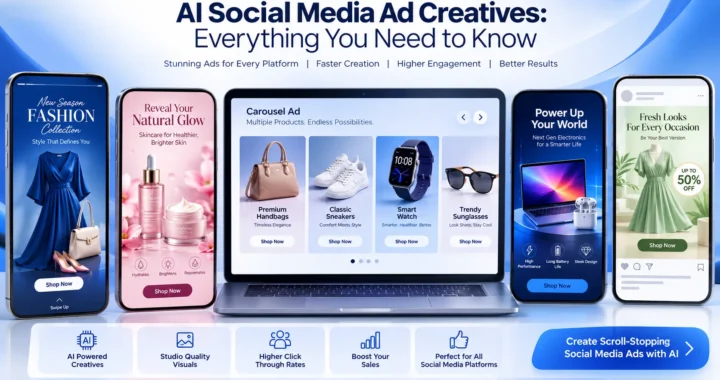
Every social platform attracts different audiences. Facebook, Instagram, LinkedIn, X, Pinterest, and Google Display all reward different creative styles. AI Banners generate platform-specific creatives that increase engagement while maintaining consistent messaging across campaigns.
AI Banners for Marketplace Promotions
Marketplace sellers frequently advertise discounts, seasonal campaigns, and product launches. AI-generated banner variations help improve visibility while adapting designs for marketplace audiences and promotional events.
AI Banners Across the LovPics Workflow
The true strength of AI Banners comes from their integration with the complete LovPics AI creative ecosystem. Instead of simply generating banner designs, AI Banners connect with multiple tools that help marketers create, optimize, localize, and publish campaigns faster.
AI Banners integrate with:
- AI Graphic Designer
- Purpose-Driven Designs
- Reference-Based Banner Creation
- Multi-Language Banner Support
- AI Performance Rating
- AI Media Manager
- AI Product Photography
- AI Fashion Studio
- Bulk Image Export
Together, these tools enable marketing teams to move from campaign concept to launch using one intelligent AI-powered workflow.
Common Mistakes When Testing Banner Styles
Testing Too Many Elements at Once
Changing headlines, colors, layouts, images, and offers simultaneously makes it difficult to identify which factor improved performance. Start by testing one or two major creative elements at a time.
Ending Tests Too Early
Advertising performance often fluctuates during the first few days. Allow campaigns to collect enough meaningful data before selecting a winning banner.
Ignoring Audience Segments
Different customer groups often respond differently to creative styles. A banner that performs well with new visitors may perform differently with returning customers. Segmented testing produces more valuable insights.
Choosing Personal Favorites
Internal opinions rarely reflect actual customer behavior. The best-performing banner is determined by campaign results, not stakeholder preferences.
Reusing the Same Banner Everywhere
Every advertising platform has unique audience behavior and design expectations. Generating platform-specific banner variations generally produces stronger engagement and better campaign performance.
The Future of AI Banner Optimization
Creative optimization is becoming increasingly data-driven.
Rather than relying solely on experience and intuition, marketers now have access to AI tools that generate, evaluate, and improve creative assets before campaigns even launch.
Future AI Banner platforms will provide:
- Smarter creative recommendations
- Audience-specific personalization
- Predictive performance scoring
- Faster campaign optimization
- Automated creative experimentation
The brands that continuously test and optimize creative assets will be better positioned to reduce advertising costs while increasing campaign performance.
Comparison Table
Traditional Banner Design vs AI Banners
| Feature | Traditional Banner Design | AI Banners |
|---|---|---|
| Banner Variations | Manual | AI Generated |
| Design Speed | Slow | Fast |
| Creative Testing | Limited | Multiple Styles |
| A/B Testing Ready | Manual | Yes |
| Platform Optimization | Manual | AI Assisted |
| Performance Insights | Guesswork | AI Supported |
| Scalability | Limited | Excellent |
| Best For | One-Off Designs | Continuous Campaign Optimization |
Decision Matrix
Who Should Use AI Banners?
| User Type | Recommended |
|---|---|
| Digital Marketing Agencies | ⭐⭐⭐⭐⭐ |
| Ecommerce Brands | ⭐⭐⭐⭐⭐ |
| SaaS Companies | ⭐⭐⭐⭐⭐ |
| Performance Marketers | ⭐⭐⭐⭐⭐ |
| Social Media Teams | ⭐⭐⭐⭐⭐ |
| D2C Brands | ⭐⭐⭐⭐⭐ |
| Startup Businesses | ⭐⭐⭐⭐ |
| Small Business Owners | ⭐⭐⭐⭐ |
Frequently Asked Questions
What are AI Banners?
AI Banners use artificial intelligence to generate multiple advertising banner styles from a single campaign idea, helping marketers test creative variations and improve campaign performance.
Why should I test multiple banner styles?
Different audiences and platforms respond differently to creative designs. Testing multiple banner styles helps identify the highest-performing creative before increasing advertising spend.
How many banner variations should I test?
Most campaigns perform best when testing three to five meaningful creative variations with different layouts, messaging, or visual styles.
Can AI Banners maintain my brand identity?
Yes. LovPics AI Banners preserve your brand colors, typography, messaging, and visual identity while exploring different creative approaches.
Are AI Banners suitable for Google, Facebook, and Instagram Ads?
Absolutely. AI Banners generate creatives optimized for Google Display Ads, Facebook Ads, Instagram Ads, LinkedIn campaigns, websites, and other digital marketing platforms.
Does AI replace graphic designers?
No. AI accelerates creative exploration and production while designers continue providing strategy, branding, creativity, and final refinements.
Can AI generate banners in multiple languages?
Yes. AI Banners integrate with Multi-Language Banner Support, allowing marketers to create localized campaigns for international audiences.
Why should I use LovPics for AI Banners?
LovPics combines AI Banners, AI Graphic Designer, Purpose-Driven Designs, Reference-Based Banner Creation, Multi-Language Banner Support, AI Performance Rating, and Bulk Image Export into one complete creative platform, enabling marketers to generate, test, optimize, and publish high-performing banner campaigns faster.
Conclusion
Launching a successful advertising campaign is no longer about creating a single attractive banner. It is about discovering which creative approach resonates best with your audience.
AI Banners make this process faster and more effective by generating multiple banner styles that marketers can compare, test, and optimize before investing larger advertising budgets. Instead of relying on assumptions or internal opinions, teams can make creative decisions using real performance data.
As digital advertising becomes increasingly competitive, businesses that embrace creative experimentation will gain a significant advantage. AI Banners provide the flexibility, speed, and scalability needed to build stronger campaigns, improve engagement, and maximize marketing performance across every platform.