
GIF Speed Control: The Easy Way to Improve Product Animations

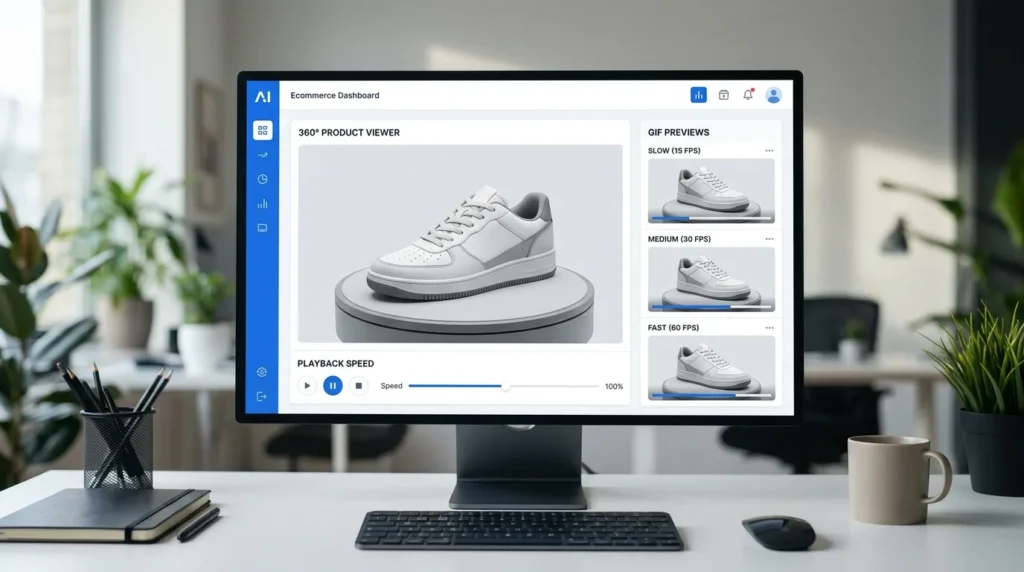
GIF Speed Control helps ecommerce brands optimize the playback speed of product animations, making them easier to view, more engaging, and better suited for different platforms. By adjusting animation timing, businesses can showcase product details more effectively, improve customer understanding, and create smoother shopping experiences that increase buyer confidence.
Key Takeaways
- Optimize product animation speed for better engagement.
- Improve customer understanding with smoother product rotations.
- Increase buyer confidence using interactive product visuals.
- Create platform-specific GIFs for ecommerce, marketplaces, and social media.
- Enhance AI 360° product views without having to recreate animations.
Why Animation Speed Matters More Than You Think
Modern ecommerce is becoming increasingly visual. Static images remain important, but animated product content is rapidly becoming the preferred way to showcase products online.
Customers enjoy seeing products rotate, move, and reveal details from multiple angles. However, creating an animation is only part of the experience.
The animation speed determines how effectively customers can actually understand the product.
- An animation that moves too quickly often causes shoppers to miss important details.
- An animation that moves too slowly may lose their attention before they finish viewing it.
Finding the right balance is essential.
The Hidden Problem with Product GIFs
Many ecommerce stores use the same animation speed everywhere.
The identical GIF appears on:
- Product pages
- Amazon listings
- Shopify stores
- Social media
- Email campaigns
- Digital advertisements
Unfortunately, each platform has different viewing behaviors. A shopper browsing Instagram expects fast, attention-grabbing visuals. Someone evaluating an expensive product on an ecommerce website usually prefers slower, more detailed animations.
Using a single animation speed across all platforms often reduces the effectiveness of your visual content.
What Is GIF Speed Control?
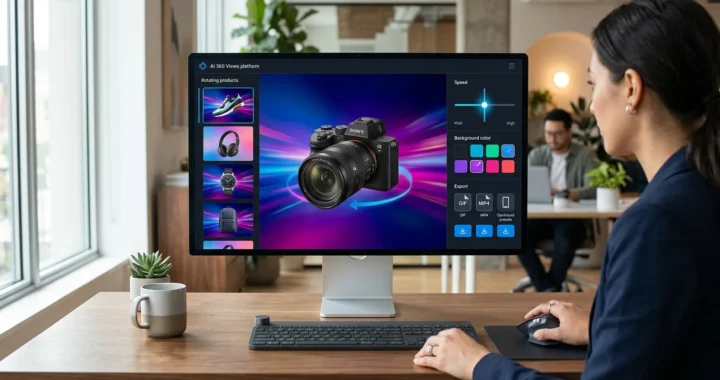
GIF Speed Control is an AI-powered feature that allows businesses to adjust the playback speed of product animations without recreating the animation itself.
Instead of generating multiple versions manually, AI intelligently optimizes animation timing for different customer experiences.
Businesses can create:
- Slow product rotations
- Medium-speed demonstrations
- Fast promotional animations
- Marketplace-ready GIFs
- Social media animations
- Website product previews
The result is a better viewing experience tailored to the platform and the customer’s buying journey.
Why Product Animation Timing Influences Buying Decisions
Customers rely heavily on visual information when shopping online.
They cannot physically touch or inspect products.
Animations help bridge this gap by allowing customers to observe products from multiple perspectives.
When playback speed is optimized, customers can:
- Notice product details
- Understand product dimensions
- Evaluate textures
- Inspect craftsmanship
- View design elements clearly
This additional understanding reduces uncertainty and increases buying confidence.
Benefits of GIF Speed Control
Optimized animation speed provides several important advantages for ecommerce businesses.
These include:
- Better customer engagement
- Improved product understanding
- Increased buyer confidence
- Longer product interaction time
- Enhanced visual storytelling
- Platform-specific optimization
- Better mobile viewing experiences
- More professional product presentations
Rather than simply making animations look attractive, GIF Speed Control improves how effectively products communicate with potential buyers.
Introducing the SPEED Framework™
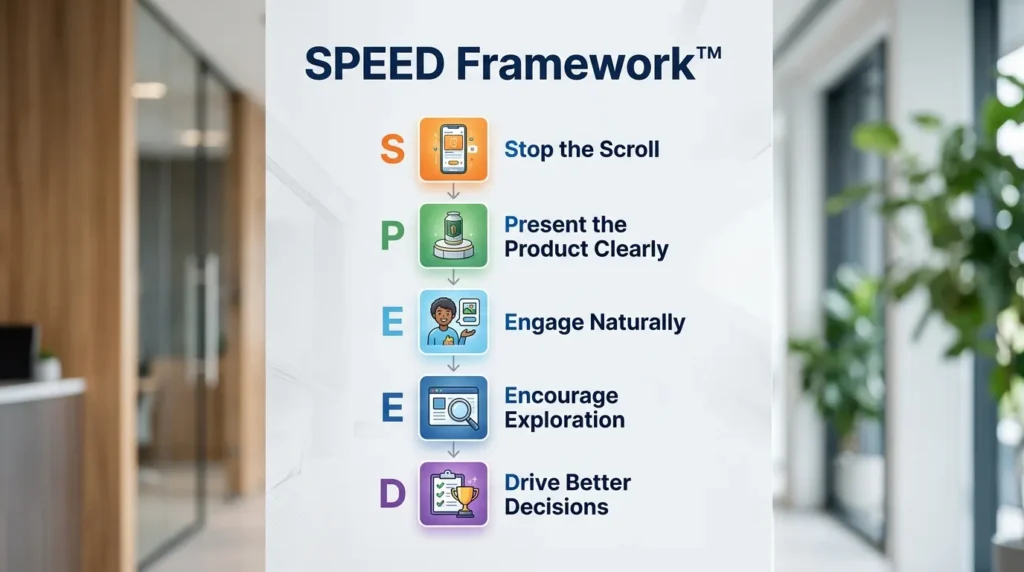
At LovPics, we believe animation should improve product understanding—not distract from it. The SPEED Framework™ helps businesses optimize every product animation for better engagement and higher conversion potential.
S – Stop the Scroll
Capture customer attention with smooth, visually engaging product animations that encourage interaction.
P – Present the Product Clearly
Choose an animation speed that allows shoppers to examine important product details without feeling rushed.
E – Engage Naturally
Create animations that feel fluid and comfortable, encouraging visitors to spend more time exploring your products.
E – Encourage Exploration
Use optimized product rotations to showcase multiple angles, textures, and features that static images cannot fully communicate.
D – Drive Better Decisions
Help customers make confident purchasing decisions by improving product visibility and reducing uncertainty.
How GIF Speed Control Works
The workflow begins with your product images or an AI-generated 360° product view. LovPics creates a smooth product animation by combining multiple product frames into a continuous rotation. Using GIF Speed Control, businesses can then adjust playback timing based on the intended platform.
Artificial intelligence helps optimize:
- Frame duration
- Rotation speed
- Playback smoothness
- Loop timing
- Customer viewing experience
- Mobile responsiveness
- Platform compatibility
Instead of rebuilding animations from scratch, marketers simply fine-tune playback speed for different marketing channels.
Why Optimized Animation Performs Better
Not every product requires the same animation speed. Luxury products often benefit from slower rotations that emphasize craftsmanship and premium details.
Fashion products typically perform well with medium-speed animations that balance engagement and visibility. Promotional advertisements and social media campaigns often use faster animations to capture attention quickly.
By matching animation speed to customer intent, businesses create experiences that feel more natural and informative rather than distracting. This simple optimization significantly improves how customers interact with visual content while strengthening overall product presentation.
Read More Articles On AI 360 & Interactive Media
Real-World Applications of GIF Speed Control
Every ecommerce business uses visual content differently. While one brand focuses on detailed product exploration, another prioritizes quick engagement on social media. GIF Speed Control allows businesses to optimize product animations for each platform without recreating their content.
GIF Speed Control for Ecommerce Product Pages
Product pages are where customers spend the most time evaluating products.
A slower, smoother animation allows shoppers to inspect:
- Materials
- Product shape
- Design details
- Texture
- Build quality
This creates a shopping experience that feels closer to handling a product in person.
GIF Speed Control for Marketplace Listings
Marketplaces such as Amazon, Flipkart, and Etsy require product visuals that communicate information quickly.
Optimized GIF animations help shoppers understand products faster while maintaining a professional appearance across marketplace listings.
GIF Speed Control for Social Media Marketing
Social platforms reward content that captures attention immediately.
Fast, engaging product animations perform well on:
- TikTok
- X
GIF Speed Control helps marketers create platform-specific animations that encourage users to stop scrolling and engage with products.
GIF Speed Control for Email Marketing Campaigns
Animated product GIFs increase the visual appeal of promotional emails. Adjusting playback speed ensures animations remain smooth while loading quickly, creating a better experience for email subscribers.
GIF Speed Control for Product Launch Campaigns
Launching a new product often requires visuals across multiple channels. Instead of producing separate animations for every platform, businesses can simply adjust playback speed while keeping the same visual assets. This saves production time while maintaining consistent branding.
GIF Speed Control Across the LovPics Workflow
The true value of GIF Speed Control comes from its integration with the LovPics AI 360 Views ecosystem. Instead of functioning as an isolated editing tool, it works alongside other AI-powered features to create engaging interactive product experiences.
GIF Speed Control integrates with:
- AI 360 Views
- Multi-Frame 360 Generation
- Background Color GIFs
- Background Text GIFs
- MP4 Video with Audio
- AI Product Photography
- AI Productshoot
- AI Media Manager
- Bulk Image Export
Together, these tools help ecommerce brands create, optimize, and distribute engaging visual experiences from a single product image.
Common Mistakes When Using Product GIFs
Using the Same Animation Speed Everywhere
Every platform has different viewing behavior. Using identical playback speed for websites, marketplaces, and social media often reduces engagement. Customize animation speed based on where customers will view the content.
Rotating Products Too Quickly
Fast animations may look exciting, but customers often miss important product details. A balanced rotation allows shoppers to understand the product more effectively.
Making Animations Too Slow
Very slow animations can reduce engagement and cause viewers to lose interest before the product completes its rotation. Finding the right balance is essential.
Ignoring Mobile Users
Most ecommerce traffic now comes from smartphones. Animations should remain smooth, lightweight, and optimized for mobile viewing experiences.
Creating Separate Animations for Every Platform
Manually exporting multiple versions wastes valuable production time. GIF Speed Control allows businesses to optimize playback speed while using the same animation across multiple channels.
The Future of Product Animations
Interactive ecommerce experiences continue to evolve. Customers increasingly expect richer product presentations that go beyond static images. Artificial intelligence is making product animations smarter by allowing businesses to personalize playback, optimize engagement, and create platform-specific experiences automatically.
Future AI animation tools will likely include:
- Adaptive playback speed
- Customer behavior optimization
- Interactive product controls
- Personalized product experiences
- AI engagement predictions
Businesses that invest in optimized visual experiences today will be better positioned to build customer trust and improve online conversions tomorrow.
Comparison Table
Standard Product GIFs vs GIF Speed Control
| Feature | Standard Product GIF | GIF Speed Control |
|---|---|---|
| Playback Speed | Fixed | Adjustable |
| Platform Optimization | Limited | Yes |
| Customer Experience | Same Everywhere | Platform-Specific |
| Product Detail Visibility | Moderate | Excellent |
| Engagement Optimization | Manual | AI Assisted |
| Mobile Experience | Basic | Optimized |
| Reusability | Limited | High |
| Best For | General Product Display | Ecommerce & Interactive Shopping |
Decision Matrix
Who Should Use GIF Speed Control?
| Business Type | Recommended |
|---|---|
| Ecommerce Stores | ⭐⭐⭐⭐⭐ |
| Fashion Brands | ⭐⭐⭐⭐⭐ |
| Marketplace Sellers | ⭐⭐⭐⭐⭐ |
| Shopify Stores | ⭐⭐⭐⭐⭐ |
| Amazon Sellers | ⭐⭐⭐⭐⭐ |
| D2C Brands | ⭐⭐⭐⭐⭐ |
| Marketing Agencies | ⭐⭐⭐⭐ |
| Product Designers | ⭐⭐⭐⭐ |
Frequently Asked Questions
What is GIF Speed Control?
GIF Speed Control is an AI-powered feature that allows you to adjust the playback speed of product GIFs and 360° animations to improve customer engagement and product presentation.
Why is animation speed important for ecommerce?
Animation speed affects how easily customers can inspect products. Optimized playback helps shoppers understand product details better, increasing confidence before purchasing.
Can I use different speeds for different platforms?
Yes. GIF Speed Control allows you to optimize animation timing for ecommerce websites, marketplaces, social media platforms, and email campaigns.
Does GIF Speed Control improve 360° product views?
Absolutely. Adjusting playback speed makes 360° product rotations smoother and easier to follow, allowing customers to explore products more naturally.
Can I convert product animations into videos?
Yes. LovPics supports exporting optimized animations as GIFs or MP4 videos with audio, depending on your marketing requirements.
Does changing GIF speed reduce image quality?
No. GIF Speed Control adjusts playback timing without affecting the quality of the underlying product images.
Which products benefit most from GIF Speed Control?
Fashion products, footwear, accessories, electronics, furniture, beauty products, and consumer goods all benefit from optimized animation speeds because customers can better evaluate design, materials, and product details.
Why should I use LovPics for GIF Speed Control?
LovPics combines GIF Speed Control, AI 360 Views, Multi-Frame 360 Generation, Background Color GIFs, MP4 Video with Audio, AI Product Photography, and Bulk Image Export into one intelligent workflow, helping ecommerce brands create engaging product animations that improve customer understanding and buying confidence.
Conclusion
Product animations are no longer just visual enhancements; they are an essential part of the modern ecommerce shopping experience.
GIF Speed Control helps businesses optimize animation timing so customers can comfortably explore products, understand important details, and make more confident purchasing decisions. Instead of creating separate animations for every marketing channel, brands can adapt playback speed to match different platforms and customer behaviors.
As ecommerce continues to become more interactive, businesses that deliver smoother, more informative product experiences will stand out from competitors. GIF Speed Control provides a simple yet powerful way to maximize the value of AI-generated product animations while improving engagement across websites, marketplaces, social media, and digital marketing campaigns.

Animation speed is such an overlooked factor in ecommerce. The same product GIF can feel completely different on Instagram vs a product page, so having AI adjust timing per platform makes a lot of sense. Tools like DeepAI can help generate and fine-tune these visuals without starting from scratch every time. Useful read for anyone optimizing product presentations.
Absolutely. LovPics follows the same philosophy: great product visuals aren’t just about animation, but about creating the right experience for each platform. From product images and reels to UGC videos, optimizing content for where customers engage makes a real difference in conversions.
The point about matching animation speed to each platform is a solid reminder—an Instagram loop needs quick impact, while a product page benefits from slower, more deliberate rotation. Adjusting timing without recreating the file is genuinely useful for teams juggling multiple channels. For anyone working through visual concepts early in a project, this design resource offers another way to explore creative directions before finalizing assets. Good breakdown of a detail that often gets overlooked.
The point about matching animation speed to each platform is a good one—a fast clip that works on Instagram can feel rushed on a product page where someone is trying to evaluate details. Being able to adjust timing without rebuilding the asset sounds like a practical win for teams juggling multiple channels. It also makes me wonder how this kind of timing logic could apply to other media, perhaps even with an AI music creation tool for syncing audio-visual pacing. Getting that balance right across formats is clearly where the engagement happens.
GIF speed control is one of those small tweaks that makes a real difference for product pages, especially when you want shoppers to actually notice details without losing patience. I’ve found that adjusting the rotation speed per platform keeps the animation feeling intentional rather than repetitive. If you’re working with AI-generated product visuals, pairing this with this kind of platform (LovPics) can help you test different angles quickly before settling on the right timing. It’s a practical workflow for anyone selling across multiple channels.
GIF speed control is one of those small details that makes a surprisingly big difference in ecommerce. I’ve noticed that product animations often feel either rushed or sluggish, which really hurts how well you can judge an item. The idea of adjusting playback speed per platform makes a lot of sense, especially since Instagram and a product page demand very different pacing. For anyone creating product visuals, pairing this with this platform for initial assets could streamline the whole workflow nicely. It’s all about giving shoppers the right viewing experience.
Animation timing really does change how shoppers perceive a product, especially for 360° views where details matter. I’ve noticed that adjusting speed per platform makes a huge difference in engagement, though it’s easy to overlook. For anyone working with pet-related merchandise, a custom pet painting service could also benefit from this kind of careful pacing when showcasing the final artwork online.
Ця стаття дуже гарна та інформативна.