AI Video Content for D2C Brands: A Complete Strategy

D2C brands operate in an environment where content plays a role in almost every stage of growth. Products need images and videos for their product pages. Social channels need regular Reels and short-form videos. Paid campaigns need multiple creative variations. New launches need promotional content, while customers need product education, and retargeting campaigns need fresh creative.
For a growing D2C brand, the problem is rarely finding another content idea. The problem is producing enough high-quality content to support everything the business is trying to do.
Traditional video production can make that difficult. Every new concept may require scripting, filming, products, locations, models, presenters, editing, voiceovers, and multiple rounds of revisions.
AI video creation changes the production model. Instead of treating every video as an independent production project, D2C brands can build a repeatable content system around their existing product assets.
The opportunity is bigger than simply creating videos faster. AI can help D2C brands create more content variations, test more creative ideas, support more channels, and build a consistent visual content pipeline.
This guide explains how to build that strategy.
Why Video Has Become Essential for D2C Brands
D2C brands typically need to communicate directly with customers without relying entirely on physical retail or sales teams.
That puts greater pressure on digital content.
A customer may discover a product through a Reel, see an advertisement later, visit the product page, compare alternatives, and eventually return through a retargeting campaign.
Video can support each of these interactions.
A short video can:
- Introduce a product
- Demonstrate how it works
- Explain a feature
- Show a product in context
- Present customer benefits
- Tell a brand story
- Answer common questions
- Promote an offer
- Encourage a purchase
The same product can therefore require several different video formats. This is why D2C brands need a content strategy, not simply a video-production strategy.
The Content Production Challenge for D2C Brands
D2C businesses often move faster than traditional production workflows allow. A brand may launch new products every few weeks, introduce new colors, run seasonal campaigns, test new offers, enter new markets, or create multiple advertising concepts simultaneously. Every change creates new content requirements.
A traditional workflow can become a bottleneck because:
- Production takes time
- Photoshoots need coordination
- Video shoots require planning
- Creative changes require reshoots
- Multiple variations increase costs
- Localization requires additional production
- Social channels require frequent content
- Paid advertising needs constant creative testing
This is especially challenging for smaller D2C teams. They may have strong products and marketing ideas but limited creative resources. AI video gives these teams another way to approach production.
Instead of asking how to produce one perfect video, they can design a system for producing a larger number of useful videos from the same underlying product assets.
Build the Strategy Around the Product
The product should remain the foundation of the D2C video strategy. Start by identifying the assets already available.
These may include:
- Product images
- Product descriptions
- Product features
- Product benefits
- Brand guidelines
- Previous campaign visuals
- Lifestyle references
- Customer questions
- Reviews
- Promotional information
These assets can become the foundation for multiple video concepts.
For example, one product could generate:
Product Introduction
- Feature Video
- How-To Video
- Product Reel
- Paid Ad
- UGC-Style Video
- Retargeting Creative
- FAQ Video
- Seasonal Campaign Video
The important strategic shift is to stop thinking about one product as requiring one video. Think of the product as a content source.
Define the Role of Each Video
Not every video needs to sell directly. D2C brands should create videos for different purposes.
Discovery Content
The goal is to capture attention and introduce the product.
Examples include:
- Product Reels
- Short-form product videos
- Lifestyle videos
- Trend-driven creative
- Visual hooks
The content should quickly communicate why the product deserves attention.
Consideration Content
At this stage, customers need more information.
Useful formats include:
- Feature explainers
- Product demonstrations
- Comparisons
- Benefit-focused videos
- Product education
The goal is to reduce uncertainty.
Conversion Content
High-intent shoppers need a reason to act.
Conversion-focused videos can highlight:
- Key benefits
- Offers
- Product differentiators
- Social proof
- Use cases
- Strong calls to action
Retention Content
The relationship does not end when a customer purchases.
Brands can use video for:
- Product setup
- How-to instructions
- Product care
- Feature education
- Complementary products
- Cross-selling
This turns video into part of the customer experience rather than only an acquisition tool.
Choose the Right D2C Video Formats
A strong strategy uses different formats for different jobs.
Product Reels
Product Reels can turn product stills into short-form, multi-beat videos designed for social media and ecommerce campaigns.
They work particularly well for:
- New products
- Product features
- Offers
- Always-on social content
- Catalog promotion
UGC-Style Product Videos
Creator-style videos can make product communication feel more conversational.
They can be useful for:
- Product demonstrations
- Reviews and reactions
- Problem-solution storytelling
- Product benefits
- Social advertising
Product Demonstration Videos
These videos show customers how the product works.
They are particularly valuable for products where usage is difficult to understand from images alone.
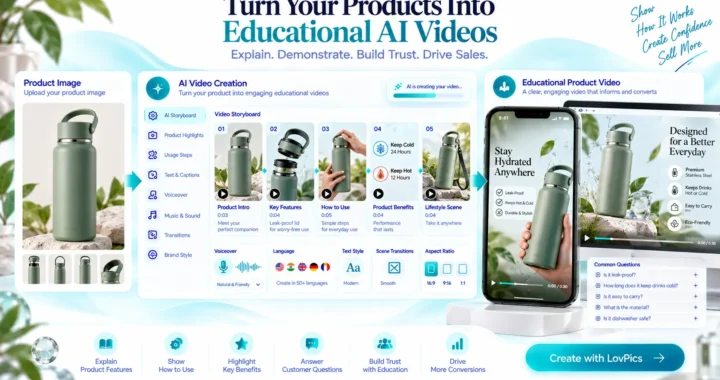
Educational Videos
Educational content can explain:
- Product features
- Usage
- Setup
- Care
- Differences between variants
- Common questions
Promotional Videos
Promotional videos can support:
- Sales
- Discounts
- Limited-time offers
- Seasonal campaigns
- Product launches
- Special collections
Brand Story Videos
D2C brands often have stories behind their products.
AI-assisted video can help transform brand narratives, product philosophies, or campaign concepts into visual content.
Create a Repeatable AI Video Workflow
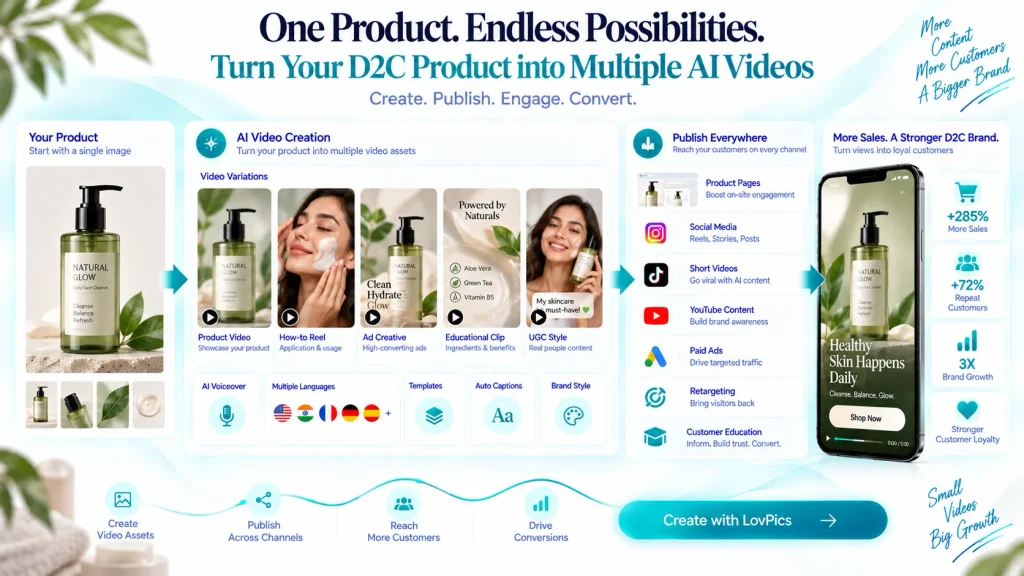
The strongest D2C strategy is built around repeatability.
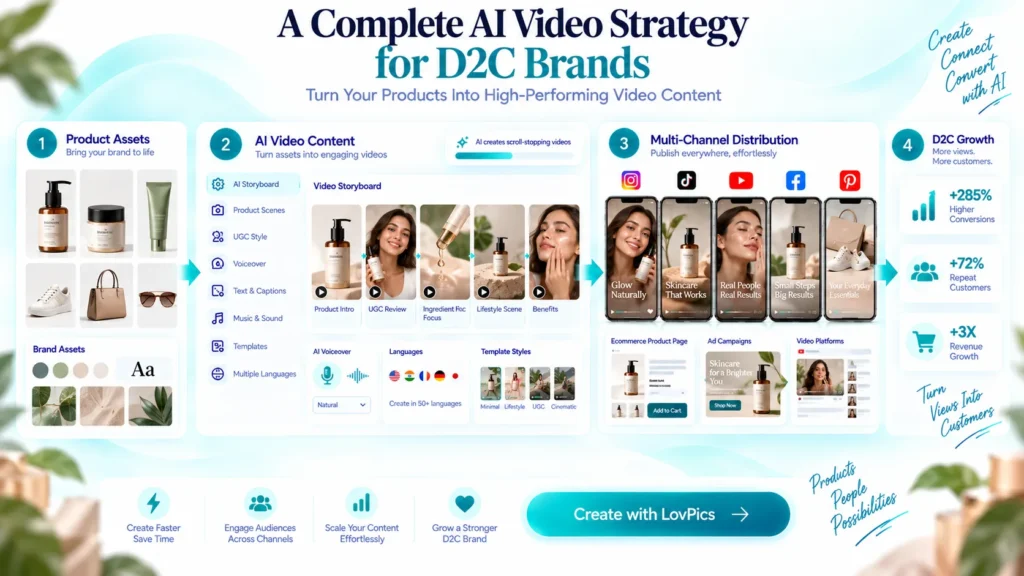
A practical workflow looks like:
Product Assets → Content Objective → Concept → Storyboard → AI Video → Review → Export → Distribution → Performance Analysis
Step 1: Gather Product Assets
Collect the images and information needed for the video.
The better the product references, the easier it becomes to maintain visual consistency.
Step 2: Define the Objective
Ask what the video needs to accomplish.
Is it designed to:
- Generate awareness?
- Explain a product?
- Drive a click?
- Recover abandoned interest?
- Promote an offer?
- Educate an existing customer?
A clear objective makes creative decisions easier.
Step 3: Develop the Concept
Choose the central idea.
For example:
Problem → Product → Solution
or:
Feature → Demonstration → Benefit
or:
Hook → Product → Social Proof → CTA
Step 4: Build the Storyboard
Break the concept into visual scenes.
This makes it easier to determine what the viewer should see and hear at each stage.
Step 5: Generate the Video
Use product references, visual direction, voiceover, music, branding, and other creative elements to create the video.
AI-assisted workflows can significantly reduce the amount of manual production required for variations.
Step 6: Review the Content
Check:
- Product accuracy
- Brand consistency
- Messaging
- Voiceover
- Text
- Visual quality
- CTA
- Aspect ratio
Step 7: Export Multiple Versions
A single concept may need versions for:
- YouTube Shorts
- Product pages
- Paid advertisements
- Marketplace listings
- Display placements
Designing for multiple destinations from the beginning improves efficiency.
Build a D2C Content Calendar Around Customer Intent
A D2C video strategy should not depend entirely on random content ideas.
Build the calendar around what customers need.
A monthly content mix could include:
Product Education: Feature and usage videos.
Product Discovery: Reels and short-form creative.
Conversion: Offer and benefit-focused videos.
Engagement: Questions, stories, trends, and community-focused content.
Retention: Product care, setup, and complementary product content.
This creates balance.
The brand is not constantly asking customers to buy.
It is also helping them discover, understand, use, and appreciate the product.
Turn One Product Into a Content Engine
One of the biggest advantages of AI video workflows is content multiplication. Suppose a D2C brand has one new product.
Instead of creating one launch video, the brand could create:
Launch
A short announcement video.
Feature
A video highlighting the product’s most important feature.
Demonstration
A video showing the product in use.
UGC
A creator-style product presentation.
Education
A video explaining how to use the product.
FAQ
A response to a common customer question.
Retargeting
A reminder for shoppers who viewed the product.
Offer
A promotional variation.
Social
Multiple short clips derived from the same core concept.
This turns a single product into an ongoing content source.
Use AI Video for Creative Testing
D2C brands often need to discover what messaging works.
One product may have several potential selling points.
For example:
- Comfort
- Performance
- Design
- Convenience
- Durability
- Instead of choosing one message permanently, brands can create multiple video variations and test them.
Test variables such as:
- Opening hook
- Product angle
- Feature
- Benefit
- Visual style
- Voiceover
- CTA
- Video length
The purpose of testing is not simply to find a winning video. It is to learn which message resonates with the audience.
Those insights can influence future content across paid advertising, social media, and product pages.
Scale Without Losing Brand Consistency
More content creates another problem.
If every video looks different, the brand can become visually inconsistent.
D2C brands should establish repeatable creative principles.
These can include:
- Product presentation
- Typography
- Visual hierarchy
- Color usage
- Voice
- Scene composition
- CTA style
- Animation approach
Reusable templates can help preserve these structures.
LovPics reusable templates allow teams to retain effective layouts, visual structures, and styles and apply them across new products and campaigns.
The objective is to combine creative variation with brand consistency.
Personalize Content Where It Matters
Not every customer needs the same video.
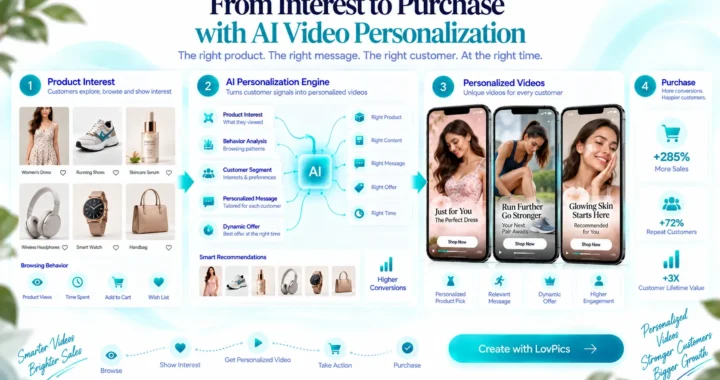
D2C brands can create variations based on:
- Product interest
- Product category
- Customer segment
- Buying stage
- Previous purchase
- Geography
- Language
- Campaign source
For example, a shopper who viewed a product may see a product-focused video.
A returning customer may see a complementary product.
A first-time shopper may see a brand introduction.
Personalization should always serve a clear purpose.
The goal is not to create infinite variations.
It is to make content more relevant.
Build a Multilingual D2C Video Strategy
As D2C brands expand into new markets, language becomes an important part of content strategy.
A video created for one market may need versions in multiple languages.
AI-assisted video workflows can make localization more practical.
A brand can preserve:
- Core product visuals
- Story structure
- Brand identity
- Product benefits
while adapting:
- Voiceover
- On-screen text
- Language
- Cultural context
- CTA
This allows D2C brands to expand content across markets without rebuilding every campaign from the beginning.
Repurpose Video Across the D2C Funnel
A good D2C video should not exist in only one location.
One concept can be adapted across the customer journey.
For example:
Product Education Video → Product page → Short educational Reel → Paid ad → Retargeting creative → FAQ content → Customer support resource
This increases the return on creative production.
Instead of constantly searching for completely new ideas, teams can extract additional value from concepts that already exist.
Related LovPics AI Video Solutions
D2C brands can combine several LovPics capabilities to create a broader visual production system.
AI Product Video Maker
Create product videos from product images and brand assets for ecommerce, marketplaces, and social campaigns.
Product Reels
Transform product stills into short-form, multi-beat videos for product promotion and social campaigns.
UGC Product Showcase Reels
Create creator-style product presentations using product references and optional creator portraits.
AI Reels
Create storyboard-driven videos with voiceover pacing, music, branding, and CTA elements.
AI Product Photography
Generate product visuals that can serve as the foundation for video and broader ecommerce content.
AI Fashion Photoshoot
Create on-model fashion visuals for D2C apparel and fashion brands.
AI 360° View
Create multi-angle product visuals for products where customers benefit from seeing the item from different perspectives.
E-Commerce Pack
Create coordinated product, model, banner, and ecommerce assets around products and campaigns.
AI Banner Generator
Create supporting campaign and advertising visuals that complement video content.
Reusable Templates
Preserve successful creative structures so new products and campaigns can be produced more consistently.
Real-World Applications for D2C Video Content
Fashion D2C Brands
Fashion brands need constant visual content for new collections, product launches, social campaigns, and seasonal promotions.
AI can help create:
- Product Reels
- On-model videos
- Styling content
- Collection videos
- Product feature videos
- Promotional creatives
A single apparel product can therefore support multiple pieces of content.
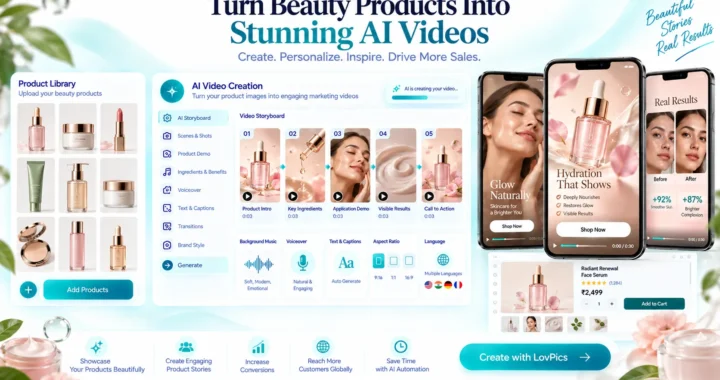
Beauty D2C Brands
Beauty products often require explanation.
Videos can demonstrate application, routines, benefits, product combinations, and usage instructions.
This can help customers understand the product before purchasing.
Jewelry D2C Brands
Jewelry benefits from close-up visual storytelling.
AI-assisted video can emphasize:
- Product details
- Design
- Styling
- Gifting
- Collection stories
- Occasion-based campaigns
Consumer Electronics
Electronics brands can use video to demonstrate features, setup, controls, and use cases.
This is particularly useful when specifications alone are difficult to understand.
Home and Lifestyle Brands
Home products can benefit from contextual demonstrations.
Instead of showing only the product, videos can communicate how it fits into an everyday environment or solves a practical problem.
Food and Beverage D2C Brands
Product videos can showcase packaging, serving ideas, product benefits, recipes, and consumption moments.
Short-form video can also support seasonal and promotional campaigns.
Across the LovPics Ecosystem
A D2C video strategy becomes significantly more powerful when it connects with the wider visual content workflow.
Product photography can provide the foundation.
Creative concepts can establish campaign direction.
AI video can turn those assets into motion.
Banners, ecommerce images, 360° visuals, and social creatives can reinforce the same campaign.
The broader system can look like:
Product → Visual Assets → Creative Concepts → Video → Ads → Ecommerce → Social → Insights
This allows D2C brands to build a connected content ecosystem rather than producing isolated assets.
Expand D2C Video Content With LovPics
LovPics can help D2C brands move from one-off video production toward a scalable visual content workflow.
Instead of organizing a separate production process for every campaign, brands can reuse product references, creative structures, templates, and visual assets to produce new video variations.
This is particularly useful when a D2C brand has:
- A growing product catalog
- Frequent product launches
- Multiple marketing channels
- Regular paid campaigns
- Multiple customer segments
- Multiple geographic markets
The result is a more flexible content operation.
D2C teams can spend less time coordinating repetitive production and more time deciding which products, messages, and creative ideas deserve attention.
Common Mistakes D2C Brands Make With AI Video Content
Creating Videos Without a Strategy
Producing more videos does not automatically create better marketing.
Better approach: Assign every video a clear role within the customer journey.
Making Every Video a Sales Pitch
Constantly asking customers to buy can make content repetitive.
Better approach: Mix promotional videos with education, discovery, demonstrations, and useful product content.
Creating Content for Only One Channel
A video designed for one destination may have limited value elsewhere.
Better approach: Plan content variations for multiple relevant channels.
Ignoring Product Accuracy
AI-generated visuals still need to represent the actual product correctly.
Better approach: Use strong product references and review every important detail.
Prioritizing Quantity Over Quality
AI makes it easier to create more content, but volume alone is not a strategy.
Better approach: Create content around meaningful customer needs and business objectives.
Using the Same Creative Angle Repeatedly
Even frequent production can become repetitive if every video uses the same message.
Better approach: Test different benefits, hooks, use cases, and storytelling structures.
Losing Brand Identity
AI-generated content can become inconsistent when there are no clear creative guidelines.
Better approach: Establish reusable brand and visual principles.
Failing to Measure Results
Content production without measurement makes it difficult to understand what deserves more investment.
Better approach: Connect creative performance to business outcomes.
The Future of AI Video Content for D2C Brands
D2C brands are moving toward continuous content production.
The old model was often: Campaign → Production → Launch → Stop
The emerging model is: Create → Test → Learn → Adapt → Reuse → Scale
AI video makes this continuous model more practical.
A product can generate multiple creative concepts.
Winning concepts can become templates.
Templates can be adapted to new products.
Successful messages can be localized.
High-performing videos can generate new variations.
The result is a content system that becomes more useful over time.
The future of D2C video is therefore not simply about replacing traditional production.
It is about making creative production more responsive.
When brands can produce, test, learn, and adapt faster, they can respond more effectively to customers and changing market conditions.
Comparison Table
| Traditional D2C Video Production | AI-Assisted D2C Video Strategy |
| Individual production projects | Repeatable content workflows |
| High effort for each variation | Easier creative variation |
| Frequent dependence on shoots | More use of existing product assets |
| Limited number of concepts | More concepts can be tested |
| Manual adaptation | Template-driven adaptation |
| Difficult to localize at scale | More practical multilingual variations |
| Content often campaign-specific | Content can support the entire customer journey |
| Scaling requires more production resources | Scaling can rely more heavily on reusable systems |
Decision Matrix
| D2C Goal | Recommended Video Content |
| Build awareness | Product Reels and short-form discovery videos |
| Launch a product | Product launch and feature videos |
| Explain the product | Demonstration and educational videos |
| Increase conversions | Benefit-focused and promotional videos |
| Retarget visitors | Product-specific retargeting videos |
| Cross-sell | Complementary product videos |
| Improve retention | Setup, usage, and care videos |
| Enter new markets | Localized and multilingual videos |
| Test messaging | Multiple creative variations |
| Scale catalog content | Template-based product video workflows |
Frequently Asked Questions
What is AI video content for D2C brands?
AI video content for D2C brands refers to AI-assisted workflows used to create product videos, Reels, advertisements, educational content, demonstrations, and other video assets for direct-to-consumer marketing.
Why should D2C brands use AI for video creation?
AI can help D2C brands produce and adapt video content more efficiently, especially when they need frequent creative variations across products, campaigns, audiences, and channels.
Can AI create D2C product videos from product images?
Yes. Product images can serve as references for creating product-focused video content, reducing the need to begin every project with a new video shoot.
What types of videos should a D2C brand create?
A strong strategy can include discovery videos, product demonstrations, educational videos, promotional videos, UGC-style videos, retargeting creatives, launch videos, and customer retention content.
How can D2C brands create more video content without increasing production complexity?
Use reusable templates, modular creative structures, product references, repeatable storyboards, and a defined workflow for generating and adapting content.
Can AI video content be used for paid advertising?
Yes. D2C brands can create multiple creative variations for advertising and test different hooks, benefits, products, messages, and calls to action.
Can D2C brands use AI videos for product pages?
Yes. Product videos can help demonstrate products, explain features, and provide additional information to shoppers on ecommerce product pages.
How can D2C brands measure AI video performance?
Relevant metrics can include video engagement, click-through rate, product-page engagement, add-to-cart rate, conversion rate, revenue, and advertising efficiency.
Can AI video help D2C brands expand internationally?
AI-assisted workflows can make it easier to adapt video content into different languages and market-specific versions while retaining the underlying product story and creative structure.
What is the biggest advantage of AI video for D2C brands?
The biggest strategic advantage is scalability. D2C brands can move from producing individual videos to building repeatable systems for creating, testing, adapting, and distributing video content across their product catalog and marketing channels.
Conclusion
D2C brands need content everywhere.
They need videos for discovery, product pages, social media, advertising, launches, retargeting, education, and customer retention.
Trying to produce all of that through traditional workflows can create a significant bottleneck.
AI video provides a different approach.
Instead of treating every video as an isolated production project, D2C brands can build a repeatable system around their existing product assets.
- Start with the product.
- Define the customer and business objective.
- Choose the right video format.
- Build reusable creative structures.
- Create multiple variations.
- Distribute them across relevant channels.
- Measure what works.
- Then use those insights to improve the next round of content.
- The real advantage is not simply creating videos faster.
It is building a D2C content engine that can continuously turn products, ideas, and customer insights into useful video content.
That is how AI video can move from a production tool to a strategic growth capability for D2C brands.