AI 360 Views: The Easy Way to Build Buyer Confidence

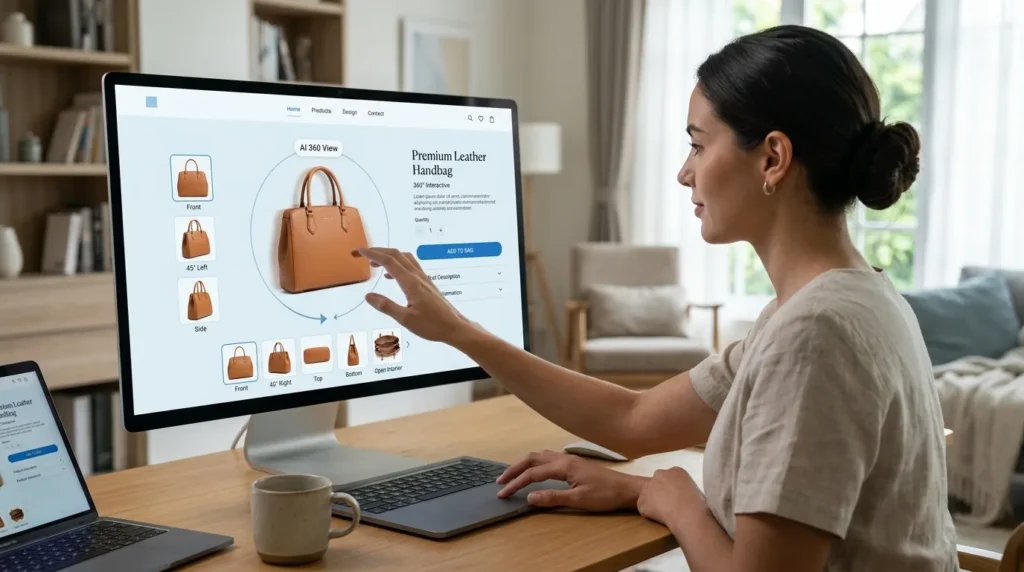
AI 360 Views allow ecommerce brands to create interactive product experiences that let shoppers view products from every angle before purchasing. Unlike traditional product images that show only one perspective, AI 360 Views provide an immersive product exploration experience that builds buyer confidence, reduces purchase uncertainty, and helps customers make informed buying decisions without visiting a physical store.
Key Takeaways
- AI 360 Views create interactive product experiences for ecommerce stores.
- Shoppers can inspect products from every angle before purchasing.
- Interactive product views improve buyer confidence and engagement.
- AI 360 Views help reduce product returns caused by unmet expectations.
- Ecommerce brands can scale product visualization without expensive 360° photoshoots.
Why Product Images Alone Are No Longer Enough
Online shopping has changed dramatically over the past decade. Customers no longer expect to see just one or two product photos before making a purchase. They want to inspect products thoroughly, understand their design from every angle, and feel confident that what they order matches what they receive.
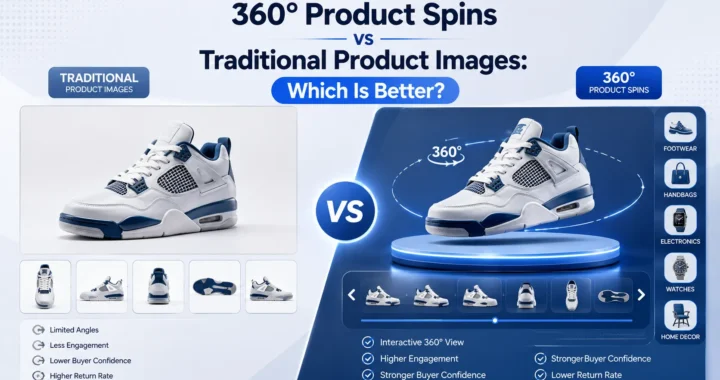
Traditional product photography provides only a limited view. Even with multiple static images, shoppers still struggle to visualize the complete product. Questions about shape, proportions, materials, finishes, and hidden details often remain unanswered.
This uncertainty directly affects purchasing behavior.
Some customers delay their decision.
Others abandon the purchase completely.
Many proceed with the purchase but later return the product because it did not match their expectations.
AI 360 Views address this challenge by creating interactive product experiences that closely replicate the confidence of examining products in person.
The Hidden Cost of Purchase Uncertainty
One of the biggest challenges in ecommerce is the inability for customers to physically interact with products before buying.
In physical retail stores, shoppers naturally rotate products, inspect details, evaluate quality, and compare different angles before making purchasing decisions.
Online stores remove this experience.
Instead, customers rely entirely on images provided by the seller.
If those images fail to communicate important product details, uncertainty increases.
This uncertainty often results in:
- Lower conversion rates
- Higher product return rates
- Increased customer support inquiries
- Reduced buyer confidence
- Lost sales opportunities
- Negative product reviews
Providing richer product visualization helps eliminate these barriers before customers complete their purchase.
What Are AI 360 Views?
AI 360 Views use artificial intelligence to generate interactive product experiences that allow shoppers to rotate products and examine them from multiple perspectives.
Instead of displaying several disconnected product images, AI creates a continuous viewing experience where customers can explore the product naturally.
The technology intelligently generates additional viewing angles while maintaining accurate proportions, colors, textures, lighting, and product details.
This creates the impression of holding the product in your hands and rotating it freely.
Unlike traditional 360° photography that requires specialized camera rigs, multiple photographs, and extensive post-processing, AI 360 Views simplify the entire workflow while producing professional ecommerce-ready results.
Why AI 360 Views Build Buyer Confidence
Confidence plays a critical role in every online purchase.
When shoppers clearly understand what they are buying, they are more likely to complete their purchase without hesitation.
AI 360 Views strengthens buyer confidence by giving customers greater control over the shopping experience.
Instead of relying on carefully selected product angles chosen by the seller, shoppers can inspect products themselves.
They can rotate products to view:
- Front
- Back
- Side profiles
- Top view
- Bottom view
- Design details
- Product shape
- Surface finish
This interactive experience helps answer many questions before customers need to contact support or search for additional information elsewhere.
As confidence increases, purchasing decisions become easier.
Introducing the VIEW Framework™
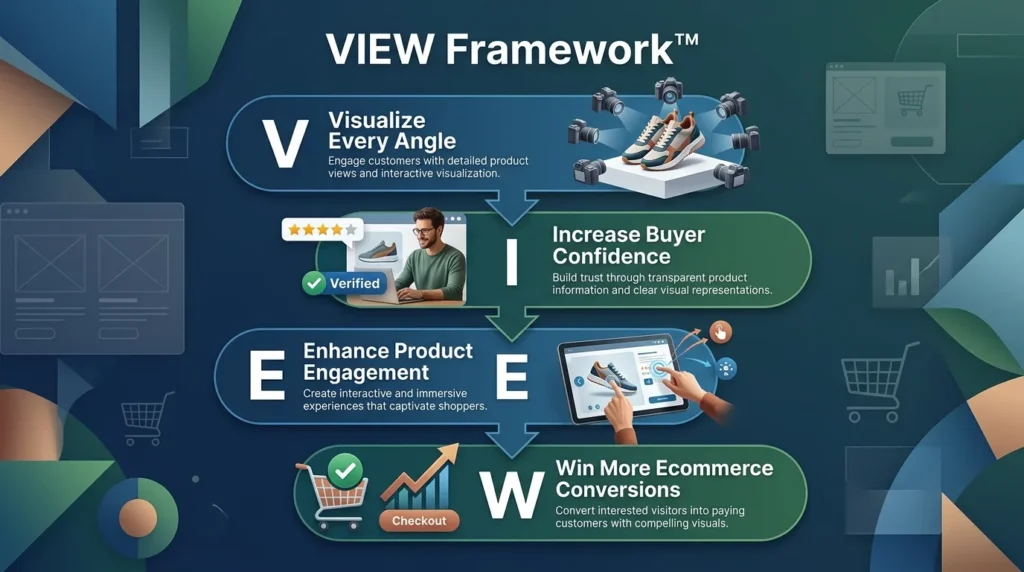
At LovPics, we believe interactive product visualization should do more than showcase products. It should help customers make confident purchasing decisions while helping ecommerce brands reduce returns and improve conversions.
V – Visualize Every Angle
Allow shoppers to rotate products freely and inspect every important detail instead of relying on static product images.
I – Increase Buyer Confidence
Reduce uncertainty by giving customers complete visibility into the product before they purchase, creating a more informed shopping experience.
E – Enhance Product Engagement
Interactive experiences encourage shoppers to spend more time exploring products, increasing engagement and helping them better understand product quality and features.
W – Win More Ecommerce Conversions
Greater buyer confidence often leads to stronger conversion rates, fewer abandoned purchases, and lower product return rates over time.
How AI 360 Views Work
The workflow begins with a product image.
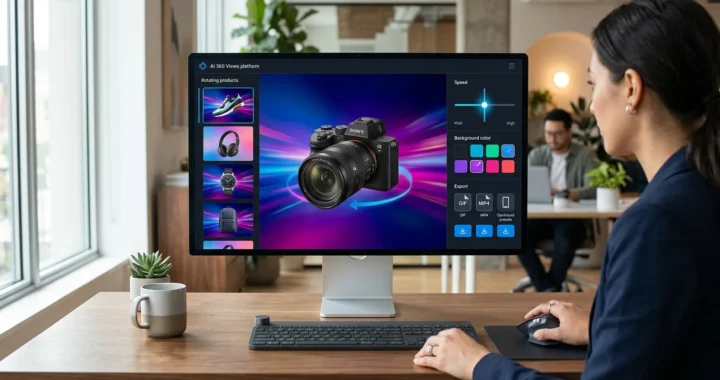
Brands upload an existing product photo into the LovPics AI 360 Views platform.
Artificial intelligence analyzes the product by understanding its dimensions, structure, textures, lighting, and visible design characteristics.
Using this information, the AI generates realistic intermediate viewing angles that create a smooth interactive rotation experience.
Instead of manually photographing products dozens of times using specialized 360-degree equipment, brands can produce immersive product experiences much faster.
The generated AI 360 Views can then be embedded directly into ecommerce product pages, allowing shoppers to interact with products naturally before making a purchase.
Why AI Is Transforming Product Visualization
Traditional 360-degree photography has always delivered excellent product experiences, but it requires considerable time, equipment, and production expertise.
Every product typically needs multiple photographs captured using specialized rotating platforms before images are processed into an interactive viewer.
Read More Articles On AI 360 & Interactive Media
AI significantly simplifies this workflow. Rather than capturing dozens of individual photographs, artificial intelligence generates additional viewing angles intelligently from existing product images.
This dramatically reduces production time while making interactive product experiences accessible to businesses of every size.
Instead of reserving 360-degree visualization only for premium products, ecommerce brands can now scale immersive product experiences across their entire catalog.
Real World Applications of AI 360 Views
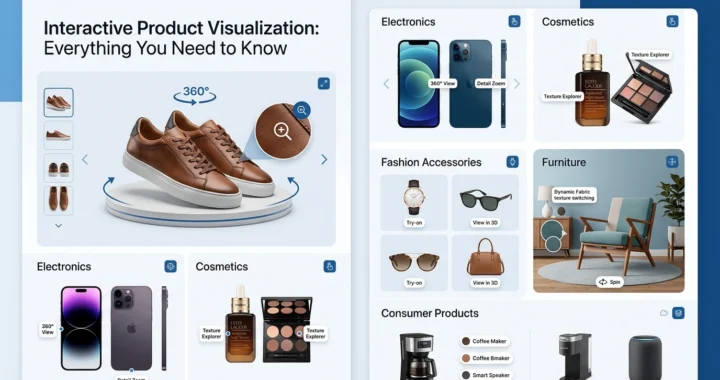
Interactive product visualization is becoming an essential part of modern ecommerce. Customers expect to inspect products thoroughly before purchasing, regardless of whether they are shopping for fashion, electronics, furniture, beauty products, or home décor. AI 360 Views help brands deliver this experience without the complexity and cost of traditional 360-degree photography.
Fashion Ecommerce
Fashion shoppers want to examine garments from every angle before making a purchase. While front-facing images provide basic information, they rarely show how products look from the sides or back. AI 360 Views allow shoppers to explore clothing, shoes, handbags, and accessories interactively, helping them understand design details and increasing confidence before ordering.
Furniture and Home Decor
Large purchases require greater customer confidence. Furniture buyers often want to inspect textures, finishes, dimensions, and design details before investing in expensive products. AI 360 Views provide a more immersive experience, allowing customers to explore products virtually and make more informed purchasing decisions.
Consumer Electronics
Electronic products contain multiple design elements that influence buying decisions, including ports, buttons, connectors, displays, and build quality. Interactive 360-degree visualization enables shoppers to inspect products thoroughly before purchasing, reducing uncertainty and improving overall satisfaction.
Beauty and Lifestyle Products
Premium packaging often plays an important role in purchasing decisions. AI 360 Views help customers explore bottles, containers, labels, and product finishes from every angle, creating a richer shopping experience while reinforcing brand quality.
Marketplace Listings
Online marketplaces are highly competitive, with multiple sellers offering similar products. Interactive product experiences help listings stand out by allowing customers to inspect products more thoroughly than static images alone. This additional engagement can improve customer confidence and encourage purchasing decisions.
Why Interactive Shopping Improves Customer Trust
Trust is one of the biggest factors influencing ecommerce success. Customers naturally trust products they can understand clearly.
Interactive product experiences reduce uncertainty because shoppers no longer rely solely on carefully selected photographs. Instead, they gain control over how they inspect products.
This creates several important advantages:
- Better understanding of product quality
- Increased transparency
- Greater confidence before purchasing
- Reduced hesitation during checkout
- Higher customer satisfaction after delivery
The closer an online shopping experience feels to an in-store experience, the more comfortable customers become when making purchasing decisions.
AI 360 Views Across the LovPics Workflow
The true value of AI 360 Views becomes even greater when combined with the broader LovPics ecosystem.
Rather than functioning as an isolated feature, AI 360 Views integrates seamlessly with other AI-powered ecommerce content tools to create a complete visual production workflow.
AI 360 Views work naturally alongside:
- AI Product Photography
- AI Productshoot
- AI Fashion Studio
- AI Product Photos
- AI Product Design
- AI Virtual Try-On
- E-commerce Image Packs
- E-commerce Shoot Packs
- Bulk Image Export
- Reusable Templates
Together, these tools allow businesses to move from a single product image to a complete collection of interactive product experiences, marketing assets, marketplace visuals, and e-commerce-ready content.
Common Mistakes Ecommerce Brands Make
Using Only Static Product Images
Many ecommerce stores still depend entirely on static product photographs. While these images remain important, they often fail to answer the questions customers have before purchasing. AI 360 Views provide a richer and more informative shopping experience.
Reserving Interactive Views for Premium Products
Some brands use 360-degree product visualization only for their most expensive products because traditional production is costly. AI makes it possible to scale interactive product experiences across much larger catalogs without dramatically increasing production costs.
Ignoring Product Exploration
Customers spend more time interacting with products that provide richer visual experiences. Brands that fail to encourage exploration often lose engagement opportunities that could influence purchasing decisions.
Treating Product Visualization as an Afterthought
Many businesses focus heavily on advertising while overlooking product presentation. However, even the most successful marketing campaign cannot compensate for product pages that fail to build buyer confidence. AI 360 Views strengthen the product experience where purchasing decisions actually occur.
The Future of Interactive Ecommerce
Customer expectations continue to evolve as ecommerce technology advances.
Static product images alone are becoming less effective because shoppers increasingly expect interactive experiences that provide greater transparency before purchasing.
Artificial intelligence is making immersive product visualization accessible to businesses of every size. Instead of investing in specialized 360-degree photography equipment and complex production workflows, brands can now generate interactive product experiences quickly and efficiently.
As AI continues to improve, interactive product visualization will become a standard feature across ecommerce rather than a premium enhancement. Businesses that adopt AI 360 Views today will be better positioned to build trust, improve customer engagement, reduce product returns, and create shopping experiences that closely replicate the confidence of physical retail.
Frequently Asked Questions
What are AI 360 Views?
AI 360 Views use artificial intelligence to create interactive product experiences that allow shoppers to rotate and inspect products from multiple angles before purchasing, improving confidence and engagement.
How do AI 360 Views work?
The process begins with product images uploaded to the AI platform. Artificial intelligence analyzes the product and generates additional viewing angles, creating a smooth interactive experience without requiring traditional 360-degree photography equipment.
Do AI 360 Views improve ecommerce conversions?
Yes. Interactive product experiences help shoppers better understand products before purchasing, increasing buyer confidence and encouraging more informed purchasing decisions that can improve conversion rates.
Can AI 360 Views reduce product returns?
Yes. When customers have a clearer understanding of a product before ordering, they are less likely to experience unmet expectations, helping reduce return rates caused by uncertainty.
Are AI 360 Views suitable for Shopify stores?
Yes. Shopify merchants can integrate AI 360 Views into product pages to create more engaging shopping experiences while improving customer confidence throughout the purchasing journey.
What products benefit most from AI 360 Views?
Fashion products, footwear, furniture, electronics, home décor, beauty products, accessories, and premium consumer goods all benefit from interactive product visualization because customers often want to inspect them from multiple angles before buying.
Can AI replace traditional 360-degree product photography?
For many ecommerce applications, AI 360 Views provides an efficient alternative that significantly reduces production time and costs. Some premium commercial projects may still use traditional 360-degree photography when highly specialized production is required.
Which AI 360 Views platform is best for ecommerce?
LovPics offers a comprehensive AI 360 Views solution that integrates with AI Product Photography, AI Productshoot, AI Fashion Studio, AI Product Design, AI Virtual Try-On, E-commerce Image Packs, and other ecommerce content creation tools to help brands build interactive shopping experiences at scale.
Conclusion
Online shoppers want more than attractive product images. They want confidence that the product they receive will match what they see on the screen. Static photography alone often cannot provide that level of assurance.
AI 360 Views bridge this gap by giving customers the ability to explore products from every angle before purchasing. The result is a more engaging shopping experience that builds trust, reduces uncertainty, and helps customers make informed buying decisions.
As ecommerce continues evolving, interactive product visualization will become an expected part of the online shopping journey. Brands that adopt 360 Views today can create richer product experiences, strengthen buyer confidence, reduce return rates, and scale immersive ecommerce content without the complexity of traditional 360-degree photography.