AI Video Marketing for Fashion Brands: A Complete Guide

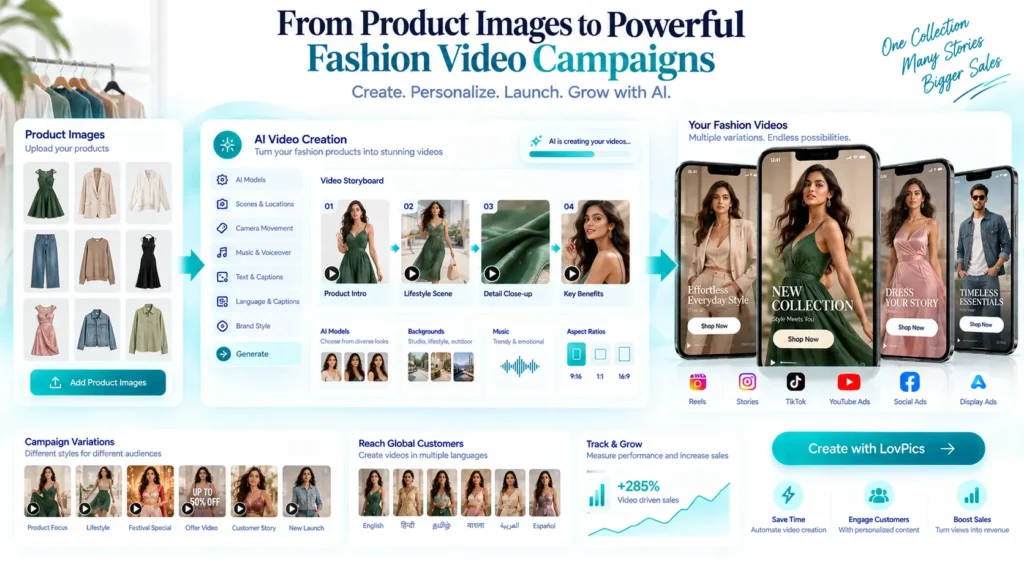
AI Video Marketing is helping fashion brands create more product videos, fashion reels, advertisements, launch content, and social media campaigns at scale. Fashion has always been a visual industry.
Customers do not simply buy a shirt, dress, saree, jacket, sneaker, or accessory. They want to understand how it looks, how it fits, how it moves, how it can be styled, and how it fits into their lifestyle.
That makes video one of the most important content formats for fashion brands.
But producing enough fashion video content can be difficult. A brand may need product videos for hundreds of SKUs, social media reels for different collections, advertisements for multiple audiences, launch videos for new products, seasonal campaigns, creator content, and localized versions for different markets.
Traditional production can quickly become expensive and time-consuming.
AI video marketing offers a different approach. Instead of treating every video as a separate production project, fashion brands can build a repeatable content system where product images, fashion photography, model references, brand assets, scripts, and creative concepts become inputs for multiple video formats.
This makes AI Video Marketing more than a way to generate individual videos. It can become a complete strategy for producing, testing, adapting, and scaling fashion content.
Why Fashion Brands Are Turning to AI Video Marketing
Fashion marketing depends heavily on visual communication.
A product image can show what an item looks like. Video can add movement, storytelling, styling, context, and emotion.
Fashion Products Become More Engaging in Motion
Video can show:
- Garment movement
- Fabric details
- Different angles
- Styling combinations
- Model presentation
- Product close-ups
- Lifestyle contexts
- Collection stories
This can make a product feel more tangible to online shoppers.
Fashion Brands Need Constantly Fresh Content
Fashion marketing does not stop after a collection is photographed.
Brands continually need content for:
- YouTube
- Ecommerce stores
- Paid advertising
- Product launches
- Seasonal campaigns
- Promotional events
- Retargeting
- Email marketing
AI can help transform existing product assets into additional content rather than requiring a completely new production cycle each time.
Large Catalogues Make Traditional Video Difficult to Scale
A fashion catalogue may contain hundreds or thousands of products.
Creating a separate professional video production for every SKU is rarely practical.
An AI-driven workflow allows brands to prioritize products and create different video formats from existing visual references.
The Content Production Challenges Fashion Brands Face
A strong AI video strategy begins by understanding the problems it is solving.
Producing Videos for Every Product
Fashion brands frequently have more products than their content teams can realistically produce videos for.
A new collection may launch with dozens of designs and multiple color variants.
Creating individual videos manually can delay campaigns.
Maintaining Consistent Brand Presentation
Different photographers, creators, studios, and editors can introduce visual inconsistencies.
A fashion brand needs consistency across:
- Models
- Lighting
- Styling
- Backgrounds
- Color treatment
- Camera language
- Typography
- Branding
AI workflows can help brands establish repeatable creative directions.
Creating Enough Variations for Advertising
Performance marketing requires testing.
A brand may need different:
- Hooks
- Product presentations
- Models
- Backgrounds
- Scripts
- CTAs
- Video lengths
- Offers
Producing every variation manually can be expensive.
Keeping Up with Seasonal Marketing
Fashion is closely connected to seasons, occasions, and trends.
Brands may need separate content for:
- Summer
- Winter
- Wedding season
- Festive campaigns
- Back-to-school
- Holiday shopping
- New collections
- End-of-season sales
A scalable content workflow becomes increasingly valuable as campaign frequency increases.
What Is AI Video Marketing for Fashion Brands?
AI video marketing for fashion brands is the use of AI-powered video creation and visual production workflows to create marketing content from fashion products and brand assets.
Instead of starting with a traditional video shoot, the workflow can begin with: Product Image + Brand Direction + Creative Concept
These inputs can then be transformed into: Storyboard → AI Video → Branding → Distribution → Performance Testing
Depending on the campaign, the resulting videos can include:
- Product showcases
- Fashion reels
- Model videos
- UGC-style content
- Collection videos
- Product advertisements
- Launch videos
- Promotional videos
- Retargeting creatives
- Multilingual videos
The important difference is that AI video becomes part of a marketing system rather than a one-off creative experiment.
Build the Right AI Video Strategy Before Creating Videos
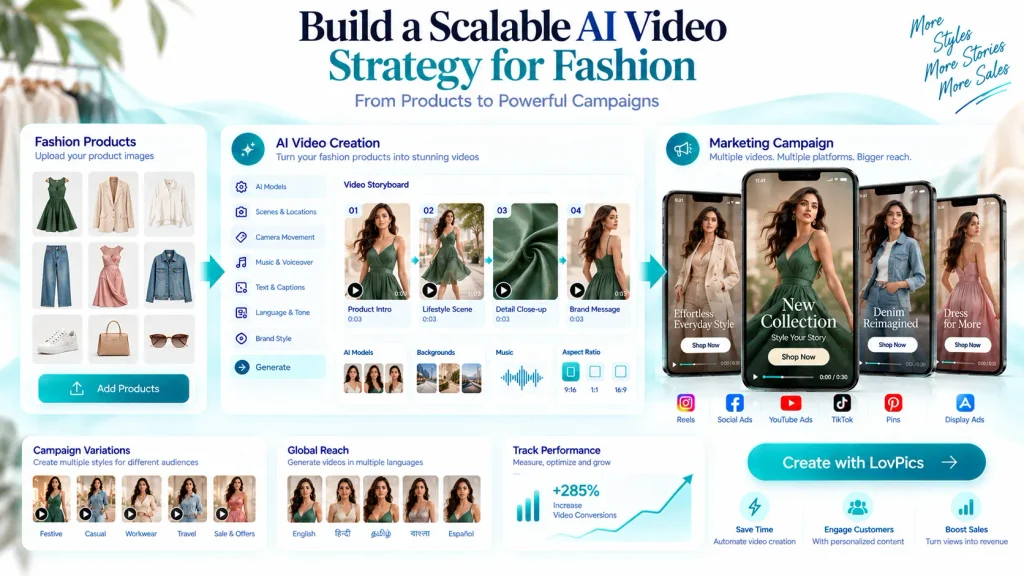
The strongest results come from planning the content system before generating videos.
Define the Business Objective
Every video should have a purpose.
For example:
- Awareness: Introduce a brand or collection to new audiences.
- Engagement: Create visually interesting social content.
- Consideration: Show product details, styling, and benefits.
- Conversion: Drive customers toward a product page or purchase.
- Retention: Introduce new collections to existing customers.
- Retargeting: Reconnect with customers who have already interacted with products.
The objective determines the video structure and CTA.
Organize Products by Priority
Do not start by trying to create videos for the entire catalogue.
Prioritize:
- Best-selling products
- New arrivals
- High-margin products
- Products receiving significant traffic
- Seasonal products
- Products used in advertising
- Products with strong photography
This makes AI video production more strategic.
Create Content Pillars
Fashion brands can organize AI video production into repeatable content pillars.
Product Showcase: Focus entirely on the product.
Fashion Styling: Show how the product can be worn or combined.
Collection Story: Present multiple products as part of one collection.
Social Content: Create short, attention-focused reels.
Promotional Content: Highlight discounts, launches, or limited-time campaigns.
Brand Storytelling: Communicate the identity and positioning of the fashion brand.
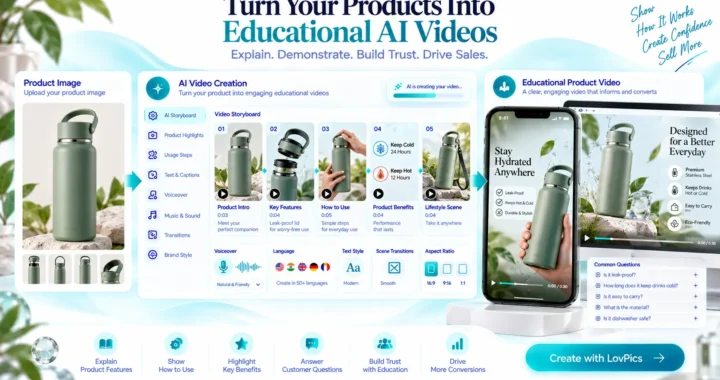
Educational Content: Explain materials, fit, styling, care, or product details.
This structure prevents every video from looking like the same product advertisement.
How to Create AI Videos for Fashion Marketing
Step 1: Start with Your Fashion Product Assets
Use high-quality product images, fashion photographs, model references, or other approved brand assets. The better the reference material, the easier it is to create a convincing final video.
For apparel, important visual information includes:
- Garment shape
- Color
- Pattern
- Fabric appearance
- Sleeves
- Neckline
- Length
- Silhouette
- Product details
Step 2: Decide the Video Concept
A fashion product can support multiple concepts.
For example, a dress could become:
Luxury Studio Showcase: A clean product-focused presentation.
Lifestyle Fashion Reel: The product appears in a realistic lifestyle environment.
Model Showcase: The garment is presented on a fashion model.
Collection Story: The product becomes part of a broader collection narrative.
Promotional Advertisement: The product is paired with an offer and CTA.
The concept should match the campaign objective.
Step 3: Choose the Right Format
For social-first fashion campaigns, 9:16 vertical video is especially useful.
It can be used for:
- Instagram Reels
- YouTube Shorts
- TikTok-style content
- Mobile advertising
Landscape video can be useful for:
- YouTube
- Websites
- Display campaigns
- Presentations
The important point is to plan the format before production.
Step 4: Create a Strong Opening
The first few seconds matter.
A fashion video can open with:
- A dramatic product reveal
- A model movement
- A close-up detail
- A before-and-after styling moment
- A collection reveal
- A strong promotional message
The opening should immediately communicate why the viewer should continue watching.
Step 5: Use AI Fashion Models Strategically
Fashion brands can use AI-generated model presentations to create additional visual variations.
Possible variations include:
- Different poses
- Different scenes
- Different styling contexts
- Different model presentations
- Different product combinations
Consistency remains important.
If a campaign uses the same model identity, styling language, and visual direction across multiple assets, the campaign feels more cohesive.
Step 6: Add Movement
The movement should support the fashion product.
Useful directions include:
- Model walking
- Gentle camera push
- Product rotation
- Fabric movement
- Close-up reveal
- Camera tracking
- Slow cinematic movement
Avoid movement that makes the garment difficult to understand.
Step 7: Add the Marketing Message
A video should communicate something beyond “look at this product.”
Possible messages include:
- New collection
- New arrival
- Limited edition
- Seasonal styling
- Premium craftsmanship
- Sustainable materials
- Festival fashion
- Wedding collection
- Everyday essentials
Keep the message focused.
Step 8: Add Branding
Branding can include:
- Logo
- Brand colors
- Typography
- Tagline
- CTA
- Outro
- Product URL or shopping direction
The goal is to make the content recognizable without overwhelming the product.
Step 9: Review the Product Carefully
AI-generated fashion content should always be reviewed against the original product.
Check:
- Garment shape
- Pattern
- Color
- Sleeves
- Neckline
- Hemline
- Prints
- Embroidery
- Accessories
- Model-product interaction
Product accuracy is especially important for ecommerce.
Step 10: Export Multiple Versions
Once the core creative is approved, create versions for different marketing objectives.
For example:
- 15-second product reel
- 30-second collection video
- Short advertisement
- Retargeting variation
- Product page video
The same underlying product assets can support multiple campaigns.
How Fashion Brands Can Build a Scalable AI Video System
The biggest advantage of AI is repeatability.
Create a Product-to-Video Pipeline
A scalable fashion workflow can look like:
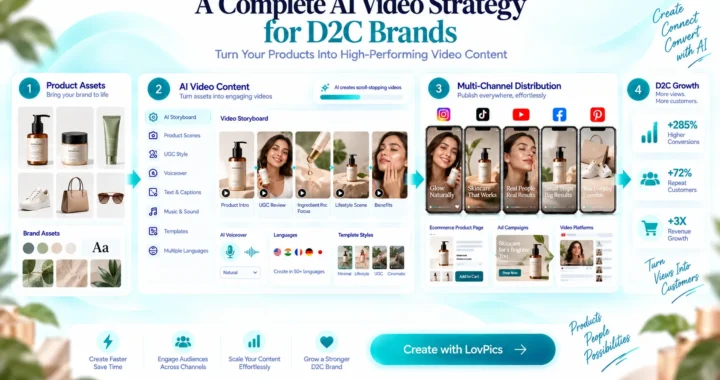
Product Image → AI Fashion Visual → Creative Concept → Storyboard → AI Video → Branding → Platform Versions → Campaign Testing → Performance Analysis
This creates a repeatable process rather than an isolated production task.
Build Reusable Creative Templates
Fashion brands should identify creative structures that consistently work.
For example:
Hook → Product Reveal → Detail → Model Shot → CTA
or:
Collection Intro → Multiple Products → Styling → Brand Message → CTA
Reusable templates make future production faster.
LovPics Reusable Templates can save successful layouts, visual structures, and campaign styles so teams can apply them again across collections and campaigns.
Produce Multiple Variants
Do not assume the first video is the best video.
Create controlled variations.
Change one major variable at a time:
- Hook
- Model
- Background
- Product angle
- Script
- CTA
- Music
- Video length
This creates useful testing data.
Use Campaign-Level Organization
Organize videos by:
- Collection
- Product
- Campaign
- Audience
- Platform
- Language
- Creative concept
- Performance
This becomes increasingly important as content volume grows.
Related LovPics AI Solutions
- Multi-Frame 360 Generation: Where the available visual workflow is appropriate, multi-frame generation can help create rotating visual presentations. It should not be presented as a substitute for an accurate physical property tour unless the output has been carefully validated.
- AI Video Gen: Use property images as visual references and create motion-led video segments with custom instructions, multiple clips, different aspect ratios, music, subtitles, logos, and branded outros.
- AI Reels: AI Reels can support short-form social video workflows using concepts, storyboards, scripts, music, branding, and platform-oriented video content.
- AI Stories: For a property that needs a more narrative presentation, AI Stories can turn a narrative or script into scene-based video segments and combine them into a longer story.
- AI Banners: Property campaigns can extend beyond video into banner creatives using reference images, instructions, multiple styles, aspect ratios, and multilingual content.
- AI Posters: Property launches, open-house promotions, and campaign announcements can also be adapted into poster formats where appropriate.
Real-World Applications for Fashion Brands
New Collection Launches
A new collection needs more than a single announcement.
A fashion brand can create:
- Teaser videos
- Collection reveal reels
- Individual product videos
- Model showcases
- Social advertisements
- Website videos
- Retargeting creatives
The same collection can therefore support a complete launch sequence.
Seasonal Fashion Campaigns
Seasonal campaigns often have short production windows.
AI can help brands create content around:
- Summer collections
- Winter launches
- Festive fashion
- Wedding season
- Holiday campaigns
- End-of-season sales
This allows creative production to stay aligned with the marketing calendar.
Fashion Ecommerce Product Pages
Product videos can complement:
- Main product image
- Gallery images
- Model images
- 360° views
- Product descriptions
The video can provide movement and context while the rest of the page provides detailed product information.
Social Media Reels
Fashion brands can use AI-generated reels to maintain a consistent publishing schedule.
Content can include:
- New arrivals
- Styling ideas
- Product highlights
- Collection stories
- Seasonal content
- Behind-the-concept storytelling
Performance Advertising
AI video can help brands create multiple creative variations for paid campaigns.
Different versions can test:
- Product-first hooks
- Model-first hooks
- Offer-first hooks
- Lifestyle visuals
- Product details
- Social-proof messaging
Retargeting
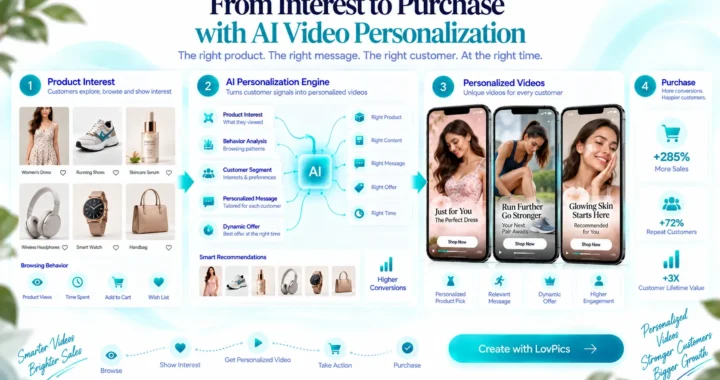
A customer who has already viewed a product may need a different message.
Retargeting videos can focus on:
- Product reminders
- New offers
- Product benefits
- Collection alternatives
- New arrivals
- Limited availability
Regional and Multilingual Fashion Marketing
Fashion brands targeting different regions can adapt video messaging to local audiences.
AI video workflows can support localized scripts, subtitles, and voiceovers while keeping the underlying visual campaign consistent.
Across the LovPics Ecosystem
A fashion brand’s AI video strategy works best when video is connected to the rest of the visual production workflow.
A typical ecosystem can look like: Product Image → AI Product Photography → AI Fashion Photoshoot → AI Fashion Catalog → AI Video → Product Reels → Social Ads → Banners → 360° Product Views → Campaign Assets
This approach allows brands to reuse the same product information across multiple content formats.
The result is not simply more video.
It is a more connected visual production system.
Expand Fashion Video Marketing with LovPics
The most effective fashion brands will not treat AI video as a replacement for every creative process. Instead, they can use it where speed, variation, and scale matter most.
For example, a single fashion product can become:
One Product
- AI Model Image
- Product Video
- Social Reel
- UGC Video
- Collection Video
- Paid Ad
- Retargeting Creative
- Banner
- Product Page Asset
This changes the economics of content production.
Instead of creating one asset and moving on to the next product, brands can build multiple marketing assets around each product.
The same system can then be repeated across an entire collection.
Common Mistakes Fashion Brands Make
Treating AI Video as Random Content Generation
Generating videos without a strategy can create a large volume of content without a clear business purpose.
Better approach: Define the objective, audience, platform, and CTA before creating the video.
Focusing on Visual Effects Instead of the Product
Fashion videos can become overloaded with transitions and effects.
Better approach: Make the garment, model, styling, and product details the visual priority.
Ignoring Product Accuracy
A visually impressive video is still a poor ecommerce asset if the garment looks different from the actual product.
Better approach: Compare the output against the original product reference before publishing.
Creating Only One Creative
One video cannot tell you what concept will perform best.
Better approach: Create structured variations and test them.
Using the Same Message for Every Audience
A new customer and an existing customer may need different messages.
Better approach: Adapt the hook, message, and CTA based on the audience stage.
Forgetting the Mobile Experience
Fashion content is heavily consumed on mobile devices.
Better approach: Design vertical-first content when the campaign is intended for short-form social platforms.
Producing Videos Without a Content Calendar
AI makes production faster, but publishing still needs planning.
Better approach: Connect video production to collection launches, seasonal campaigns, promotional periods, and social calendars.
Overlooking Brand Consistency
Different AI-generated videos can look unrelated if there is no creative direction.
Better approach: Establish consistent models, visual styles, typography, backgrounds, music direction, and brand elements.
The Future of AI Video Marketing for Fashion Brands
Fashion marketing is moving toward a model where every product can generate a much larger content footprint.
The traditional approach looks like: Product → Photoshoot → Catalogue → Campaign
An AI-enabled workflow can look more like: Product → Visual Assets → AI Content System → Multiple Videos → Multiple Campaigns → Continuous Testing
This creates a major opportunity for fashion brands. The brands that benefit most will not necessarily be the ones generating the largest number of AI videos.
They will be the brands that build the best systems for deciding:
- What to create
- For whom
- For which platform
- At what stage of the customer journey
- With which message
- How to test it
- How to reuse what works
AI therefore becomes more than a production tool.
It becomes part of the fashion brand’s content strategy.
Comparison Table
| Area | Traditional Fashion Video | AI Video Marketing |
| Initial Production | Requires physical production | Can begin with existing product assets |
| Studio Requirement | Often required | Not always required |
| Model Production | Physical models or creators | AI-generated model workflows available |
| Product Variations | Additional production required | Easier to create variations |
| Creative Testing | More expensive | More scalable |
| Seasonal Content | Production planning required | Faster content adaptation |
| Social Variations | Requires editing resources | Easier to generate multiple versions |
| Catalogue Scale | Difficult to produce video for every SKU | More scalable |
| Localization | Additional production/editing | Easier to adapt scripts and versions |
| Reuse | Often limited to original production | Product assets can support multiple formats |
Decision Matrix
| Fashion Marketing Goal | Recommended AI Video Approach |
| Showcase one product | Product Video |
| Promote a new collection | Collection Reel |
| Show apparel on models | AI Fashion Photoshoot + Video |
| Create social content | AI Reels / Product Reels |
| Create creator-led content | UGC Product Showcase |
| Test advertising concepts | Multiple AI Video Variations |
| Re-engage visitors | Retargeting Videos |
| Promote seasonal collections | Seasonal Campaign Videos |
| Reach regional audiences | Localized / Multilingual Videos |
| Support ecommerce product pages | Product Showcase + 360° Visuals |
| Scale a large fashion catalogue | Reusable Templates + Product Video Workflow |
Frequently Asked Questions
What is AI video marketing for fashion brands?
AI video marketing uses AI-powered visual and video creation workflows to produce fashion marketing content from product images, fashion references, scripts, brand assets, and creative instructions.
Can fashion brands create videos without a traditional photoshoot?
Yes. For suitable workflows, brands can start with existing product images and use AI to create additional video content without filming every product traditionally.
Can I create fashion videos from product images?
Yes. Product images can serve as references for AI-generated product showcases, fashion scenes, model presentations, and social video concepts.
Can AI create fashion model videos?
AI-powered fashion workflows can create model-based fashion imagery and turn suitable visual references into video content.
Can I create Instagram Reels for my fashion brand?
Yes. AI video workflows can create vertical content suitable for short-form social platforms, including fashion product reels and creator-led showcase videos.
Can one fashion product create multiple videos?
Yes. One product can be used for multiple creative concepts, such as a product showcase, model video, promotional reel, collection video, and retargeting advertisement.
How can fashion brands scale AI video production?
Start with high-priority products, establish reusable creative templates, create standardized workflows, produce controlled variations, organize assets by campaign, and measure performance.
Can AI videos be used for fashion advertising?
Yes. AI-generated videos can be used to create advertising variations for different audiences, products, offers, and campaign objectives.
Can fashion brands create multilingual AI videos?
Yes. Multilingual video workflows can help fashion brands adapt scripts, subtitles, and voiceovers for regional and international audiences.
Should every fashion product have a video?
Not necessarily. Brands should prioritize products where video is likely to provide additional value, such as best sellers, new launches, high-traffic products, premium products, and products being actively advertised.
Does AI video replace professional fashion photography?
Not completely. High-quality product photography remains important for ecommerce catalogues and detailed product presentation. AI video can extend those assets into additional marketing formats and reduce the need to create every piece of content through a separate production cycle.
What should fashion brands measure?
Useful metrics include:
- Video views
- Watch time
- Completion rate
- Engagement
- Click-through rate
- Product page visits
- Add-to-cart rate
- Conversion rate
- Return on ad spend
- Cost per acquisition
The right metric depends on the campaign objective.
Conclusion
AI video marketing gives fashion brands a way to rethink how they produce and distribute visual content.
Instead of treating every video as a separate production project, brands can build a repeatable system around their existing product assets.
The process can be: Product Asset → Creative Strategy → AI Visuals → Storyboard → Video → Branding → Distribution → Testing → Optimization
The real advantage comes from scale. One fashion product can become multiple videos. One collection can become an entire campaign. One successful creative structure can become a reusable template.
For fashion brands managing large catalogues, frequent launches, seasonal campaigns, and performance advertising, this can make video production faster, more flexible, and easier to scale.
The future of fashion video marketing is not simply about generating more content.
It is about creating the right content, for the right audience, at the right stage of the customer journey, and turning every product asset into more marketing opportunities.