AI Virtual Try-On Tool: The Easy Way to Create Model Photos

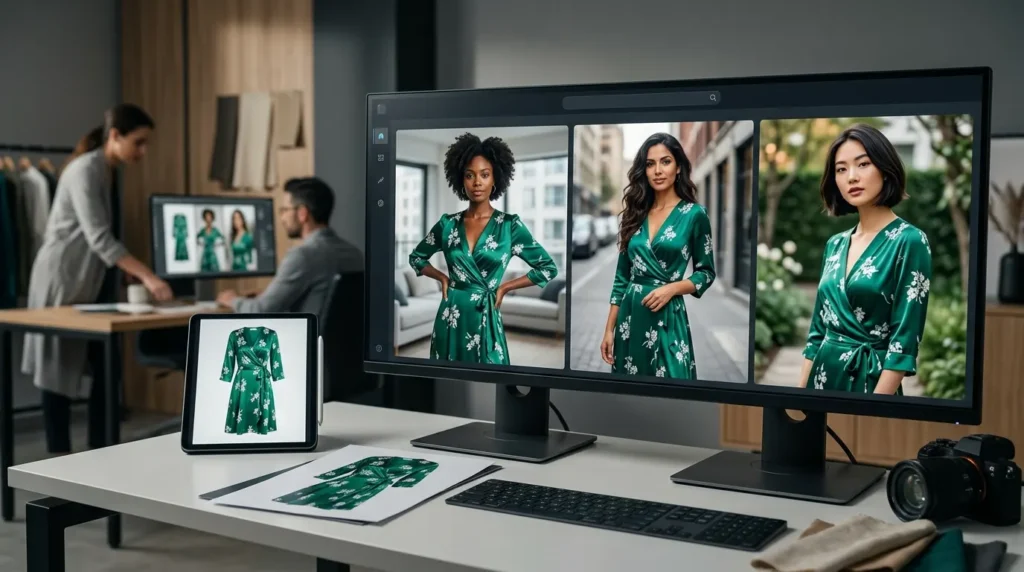
An AI Virtual Try-On Tool helps fashion brands transform flat-lay garment photos into realistic on-model images without organizing expensive photoshoots. Instead of hiring models, booking studios, and managing lengthy production schedules, businesses can generate professional model photos that preserve the garment’s fabric, color, texture, and pattern. The result is faster catalog creation, consistent branding, and high-quality product visuals ready for ecommerce websites, marketplaces, and marketing campaigns.
Key Takeaways
- AI Virtual Try-On transforms garment images into realistic model photos.
- Garment fabric, color, prints, and design details remain accurate.
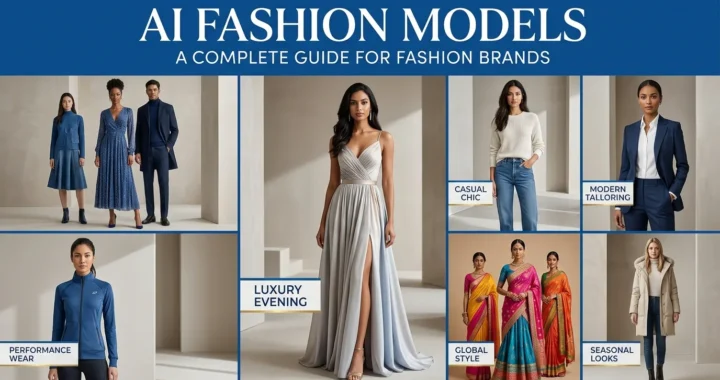
- Fashion brands can create diverse AI models for different audiences.
- AI-generated model photos accelerate product launches and reduce production costs.
- Consistent on-model photography improves customer confidence and strengthens brand identity.
Why Fashion Brands Are Moving Beyond Traditional Photoshoots
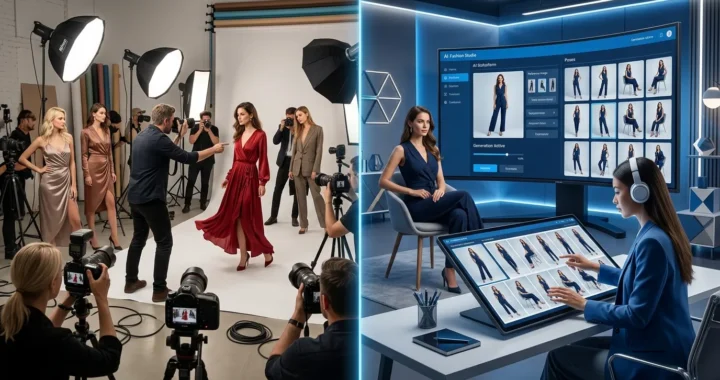
Product photography remains one of the biggest investments for fashion ecommerce businesses. Every new collection requires planning, model bookings, studio rentals, photographers, stylists, makeup artists, lighting equipment, and extensive editing before products are ready for sale.
While this workflow delivers professional results, it is expensive and difficult to scale. As fashion brands expand their catalogs, the cost and complexity of organizing repeated photoshoots increase significantly. Launching hundreds of products each season often means weeks of preparation before customers can even see the new collection.
Today’s ecommerce businesses need a faster approach that maintains professional quality without increasing operational overhead.
Artificial intelligence is making this possible.
The Challenge of Creating On-Model Product Photos
Customers prefer seeing clothing worn by real people rather than displayed as flat-lay images. On-model photography helps shoppers understand product fit, proportions, styling possibilities, and overall appearance before making a purchase.
Unfortunately, producing these images traditionally requires considerable time and resources.
Fashion brands often face challenges such as:
- Hiring professional models
- Scheduling studio availability
- Coordinating photographers
- Managing styling teams
- Editing hundreds of photographs
- Repeating the process for every collection
- Creating localized campaigns for different markets
These challenges become even greater for brands selling internationally or updating products regularly. An AI Virtual Try-On Tool removes many of these operational barriers while maintaining realistic product presentation.
What Is an AI Virtual Try-On Tool?
An AI Virtual Try-On Tool uses artificial intelligence to place garments onto realistic digital models while preserving the original clothing’s important visual characteristics. Instead of generating completely new clothing, the AI accurately transfers the uploaded garment onto selected models.
The system understands:
- Fabric texture
- Clothing shape
- Colors
- Prints
- Patterns
- Sleeves
- Folds
- Garment proportions
The generated model photos closely represent the actual product, allowing ecommerce businesses to create trustworthy product pages while dramatically reducing production time.
Instead of arranging multiple fashion photoshoots, brands can generate complete on-model image collections within minutes.
Why AI Virtual Try-On Improves Fashion Ecommerce
Online shoppers cannot physically try clothing before purchasing. As a result, product visuals become one of the strongest influences on buying decisions. Flat-lay images explain what a product looks like. On-model images help customers imagine wearing it. This difference significantly improves the shopping experience.
AI Virtual Try-On allows brands to create realistic lifestyle photography that demonstrates how garments fit naturally on different body types without organizing multiple photoshoots.
Customers gain greater confidence because they can better visualize products before purchasing, while brands benefit from faster catalog production and more consistent visual presentation.
Introducing the TRYON Framework™
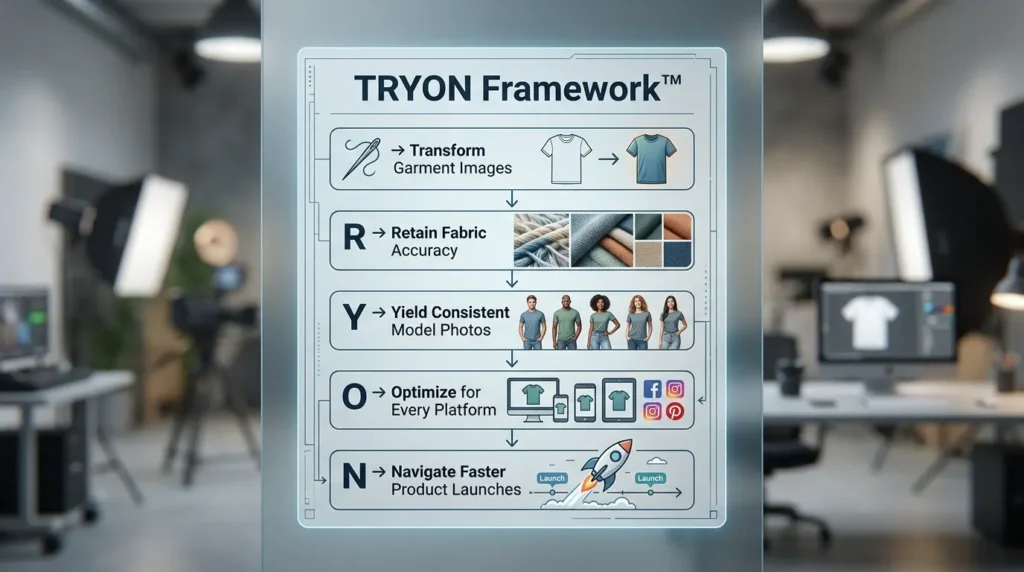
At LovPics, we believe successful AI fashion photography depends on more than simply placing clothing onto digital models. The TRYON Framework™ explains how modern fashion brands can create accurate, scalable, and conversion-focused product imagery.
T – Transform Flat-Lay Images into Model Photos
Upload a garment image once and generate realistic on-model photography without scheduling traditional fashion photoshoots.
R – Retain Every Garment Detail
Preserve fabric texture, colors, patterns, stitching, and garment structure so generated images accurately represent the original product.
Y – Yield Consistent Fashion Photography
Generate multiple products using the same photography style, lighting, composition, and model consistency across the entire catalog.
Read More Articles On AI Fashion & Apparel
O – Optimize for Every Sales Channel
Create images suitable for Shopify, Amazon, marketplaces, ecommerce websites, advertising campaigns, email marketing, and social media.
N – Navigate Faster Product Launches
Reduce production timelines from weeks to minutes by replacing repetitive fashion photography workflows with AI-powered image generation.
How an AI Virtual Try-On Tool Works
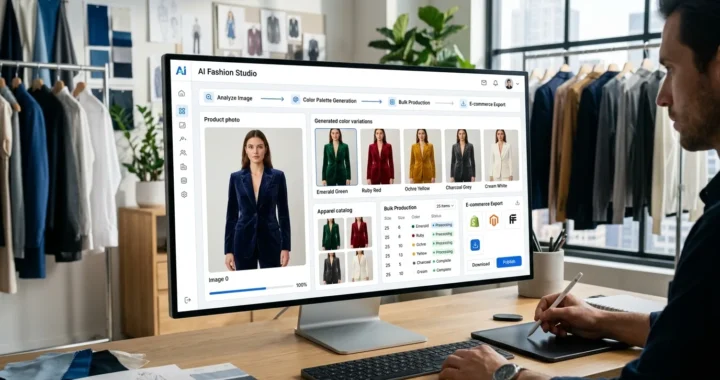
The workflow begins with a product image. Fashion brands upload a flat-lay garment photograph, clean product image, or apparel reference into the AI Virtual Try-On Tool.
Artificial intelligence analyzes the garment by understanding its construction, proportions, materials, colors, patterns, and visual characteristics.
Next, users choose the preferred model attributes, including body type, age group, skin tone, pose, and presentation style. The AI intelligently fits the uploaded garment onto the selected model while preserving the clothing’s original appearance.
Once the first image is generated, brands can easily create additional variations using different poses, diverse models, color options, or campaign styles. These images remain visually consistent, making them suitable for product pages, marketplaces, lookbooks, advertising campaigns, and social media content.
Instead of spending days coordinating traditional fashion photography, businesses can prepare complete model photo collections within a single AI-powered workflow.
Why Garment Accuracy Matters More Than AI Creativity
Many AI image generators focus on creating visually attractive images, but ecommerce businesses require something much more important.
Accuracy. Customers expect the clothing shown online to match the product they receive. Even small changes in fabric texture, colors, sleeve length, or printed patterns can create confusion and reduce trust.
An effective AI Virtual Try-On Tool prioritizes garment fidelity above artistic interpretation. Every generated image should accurately represent the real product while placing it naturally on realistic models.
This balance between creativity and accuracy makes AI-generated model photography suitable for commercial ecommerce use rather than simple visual experimentation.
Real World Applications of an AI Virtual Try-On Tool
Fashion brands create visual content for far more than product pages. Every garment appears across ecommerce websites, marketplaces, social media, advertising campaigns, email marketing, and seasonal lookbooks. Producing separate photoshoots for every channel quickly becomes expensive and difficult to manage. An AI Virtual Try-On Tool simplifies this process by generating realistic on-model images that can be reused across every customer touchpoint while maintaining consistent brand identity.
Shopify Fashion Stores
Shopify merchants constantly add new collections, seasonal launches, and promotional campaigns. Every new product requires multiple on-model images that help customers understand fit and styling. An AI Virtual Try-On Tool enables Shopify stores to create professional model photos within minutes, helping merchants launch products faster while maintaining consistent catalog quality.
Online Marketplaces
Marketplaces require high-quality product images that clearly showcase garments from different angles. AI-generated model photos help sellers present products professionally without organizing repeated fashion photoshoots. Consistent imagery also strengthens brand recognition across multiple marketplace listings.
Social Media Marketing
Fashion marketing depends heavily on engaging visuals. Instagram, Facebook, Pinterest, and other social platforms reward high-quality lifestyle content that captures attention quickly. AI Virtual Try-On allows marketing teams to create diverse campaign images featuring different models, poses, and styling options without additional production costs.
Digital Advertising
Advertising campaigns require multiple creative variations for audience testing and platform optimization. Instead of photographing every variation separately, AI Virtual Try-On generates realistic model photos that can be adapted for Google Ads, Meta Ads, display campaigns, and promotional banners while maintaining consistent product presentation.
International Fashion Brands
Global brands often create localized campaigns for different markets. AI Virtual Try-On makes it possible to generate diverse models representing different regions, body types, skin tones, and demographics while keeping the garment itself identical across every campaign. This allows brands to localize marketing without reshooting entire collections.
Why Realistic Model Photos Increase Customer Confidence
Customers want to imagine how clothing will look when worn. Flat-lay images provide useful product information, but they rarely communicate how garments fit naturally on different people.
Realistic on-model photography bridges this gap by helping shoppers visualize clothing before making purchasing decisions. Customers can better understand proportions, styling possibilities, sleeve lengths, fabric flow, and overall appearance.
Consistent model photography also strengthens trust. When every product follows the same professional photography style, customers perceive the brand as more reliable and established. This improved shopping experience can contribute to stronger engagement and better conversion opportunities.
AI Virtual Try-On Across the Fashion Content Workflow
The greatest advantage of an AI Virtual Try-On Tool comes from its ability to integrate with the broader LovPics ecosystem. Rather than functioning as an isolated AI feature, it becomes part of a connected workflow that supports every stage of fashion content production.
AI Virtual Try-On works seamlessly with:
- AI Fashion Studio
- AI Fashion Models
- Multi-Pose Generation
- Apparel Color Switch
- AI Product Photos
- AI Product Design
- E-commerce Image Packs
- E-commerce Shoot Packs
- Bulk Image Export
- Reusable Templates
Together, these tools help fashion brands move from a single garment image to complete ecommerce content libraries without repeating manual production work.
Common Mistakes Fashion Brands Make
Using Flat-Lay Images Only
Many ecommerce stores still rely primarily on flat-lay product photography. Although useful, these images do not help customers visualize how garments look when worn. Adding realistic on-model photos significantly improves product presentation.
Inconsistent Model Photography
Using different photography styles, lighting setups, or editing approaches across collections creates an inconsistent shopping experience. AI Virtual Try-On generates standardized imagery that strengthens brand identity throughout the catalog.
Ignoring Model Diversity
Modern fashion brands serve diverse audiences. Showing products on different body types, skin tones, age groups, and poses helps customers identify with the products while creating more inclusive shopping experiences.
Delaying Content Production
Waiting until traditional photoshoots are completed often delays product launches and marketing campaigns. AI Virtual Try-On accelerates content creation, allowing teams to prepare ecommerce assets much earlier in the launch process.
The Future of Fashion Product Photography
Artificial intelligence is transforming fashion photography from a resource-intensive production process into a scalable digital workflow. Instead of coordinating repeated model shoots for every new collection, brands can generate realistic on-model photography within minutes while maintaining professional quality and garment accuracy.
As ecommerce competition continues growing, customers will expect richer product experiences supported by realistic visuals and consistent presentation. Fashion businesses that adopt AI-powered workflows will be able to launch collections faster, create more diverse content, and respond more quickly to changing market demands.
AI Virtual Try-On Tools are becoming an essential part of modern fashion commerce by helping brands produce high-quality model photography at a scale that traditional production methods cannot easily match.
Frequently Asked Questions
What is an AI Virtual Try-On Tool?
An AI Virtual Try-On Tool uses artificial intelligence to transform garment images into realistic on-model photos. It preserves the clothing’s fabric, colors, patterns, and overall design while placing the garment naturally on AI-generated fashion models.
How does AI Virtual Try-On work?
The process begins with uploading a garment image. The AI analyzes the clothing, understands its structure and materials, and then generates realistic model photos based on selected attributes such as body type, skin tone, age, and pose while preserving garment accuracy.
Can AI preserve fabric and clothing patterns?
Yes. A high-quality AI Virtual Try-On Tool is designed to preserve important garment characteristics including fabric texture, colors, stitching, prints, patterns, and overall construction so generated images accurately represent the original product.
Is AI Virtual Try-On suitable for Shopify stores?
Yes. Shopify fashion stores can use AI Virtual Try-On to generate professional on-model product photos that improve product pages, accelerate catalog updates, and create consistent visual experiences throughout the online store.
Can AI generate realistic fashion model photos?
Yes. Modern AI Virtual Try-On technology creates highly realistic fashion model images featuring different body types, skin tones, poses, and styling options while maintaining natural-looking garments and professional presentation.
Does AI Virtual Try-On replace fashion photoshoots?
For many ecommerce product pages, catalogs, marketplaces, and marketing campaigns, AI Virtual Try-On can significantly reduce the need for traditional photoshoots. Premium editorial campaigns may still combine AI-generated imagery with conventional photography when required.
How accurate are AI-generated model photos?
High-quality AI Virtual Try-On platforms prioritize garment fidelity by preserving the original fabric, colors, prints, and overall design. This allows brands to create commercially suitable product imagery that closely represents the actual garment.
Which AI Virtual Try-On Tool is best for ecommerce?
LovPics is an excellent choice for ecommerce brands because it transforms garment images into realistic model photos while preserving garment details, supporting diverse AI models, generating high-resolution outputs, and integrating with AI Fashion Studio, E-commerce Image Packs, Bulk Image Export, and other ecommerce production tools.
Conclusion
Traditional fashion photography has served the ecommerce industry for years, but growing product catalogs and faster launch cycles require a more scalable approach. Organizing repeated photoshoots for every collection increases production costs, delays campaigns, and limits how quickly brands can respond to changing customer demand.
An AI Virtual Try-On Tool simplifies this process by transforming garment images into realistic model photography while preserving the fabric, colors, and design details customers expect to see. Brands can generate professional ecommerce visuals quickly, maintain consistent product presentation, and create diverse marketing content without the operational complexity of traditional production.
As artificial intelligence continues reshaping fashion ecommerce, businesses that combine AI-powered model generation with structured content workflows will be better positioned to scale catalogs, improve customer confidence, and deliver engaging shopping experiences across every digital sales channel.

The TRYON framework is a helpful way to connect image generation with practical ecommerce needs. I especially appreciate the emphasis on preserving garment details and keeping outputs consistent across channels—those are often more important than simply creating a dramatic image. It would also be useful to pair try-on visuals with clear fit guidance and privacy-conscious handling of customer photos.